seojeek

Alex Vallejo, senior software engineer

Gallery

Thirteen rooms, 1905 to 1988

Modern art and design’s loudest movements, in the order they happened. Each room shows the work, how to recognize it, and what a designer can borrow from it.
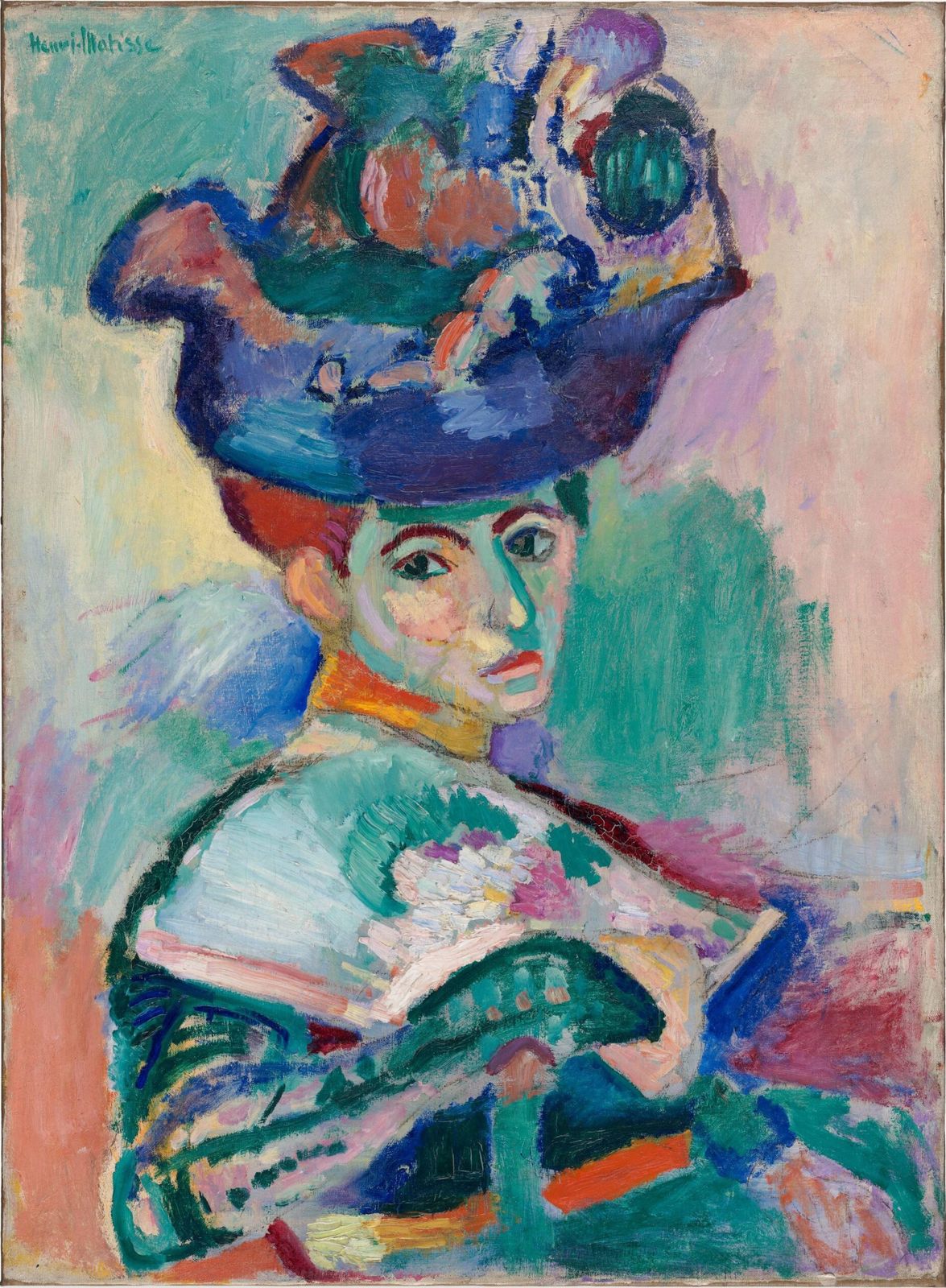
  1. Room 01Fauvism1905–1908

    Portrait of a woman in a huge, flower-heaped hat, her face, hands and dress painted in loose patches of green, ochre, violet and blue.

    Henri Matisse

    Woman with a Hat, 1905

    Oil on canvas

    San Francisco Museum of Modern Art · View record ↗

    Public domain, via Wikimedia Commons

    Painters who used color straight from the tube, as loud as they could make it.
    Enter room →

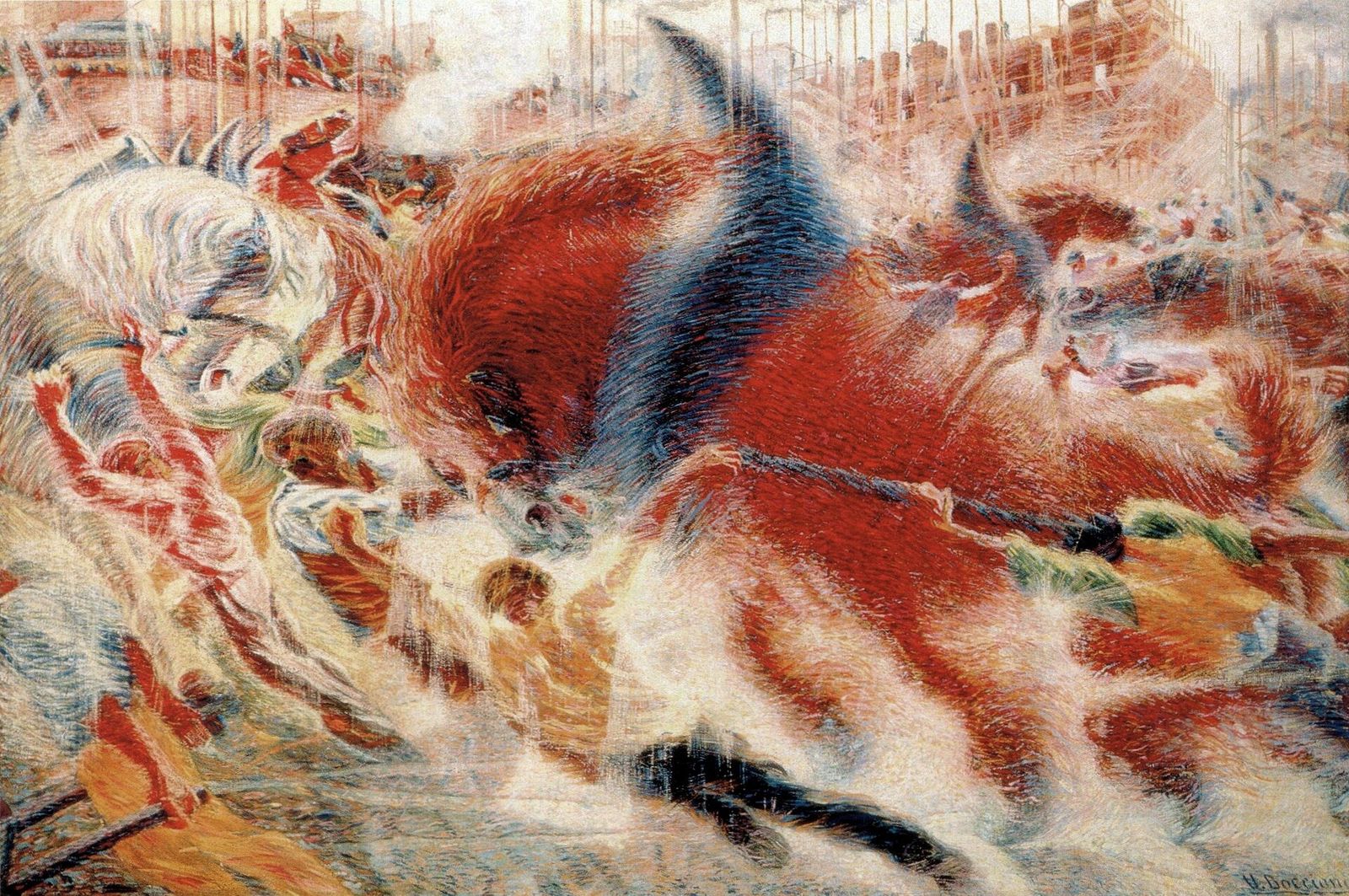
  2. Room 02Futurism1909–1916

    A huge red horse surges through a blur of straining workers and scaffolding, the scene dissolving into streaks of red, orange and blue.

    Umberto Boccioni

    The City Rises, 1910

    Oil on canvas

    The Museum of Modern Art, New York · View record ↗

    Public domain, via Wikimedia Commons

    Italian artists in love with speed, machines and the noise of the modern city.
    Enter room →

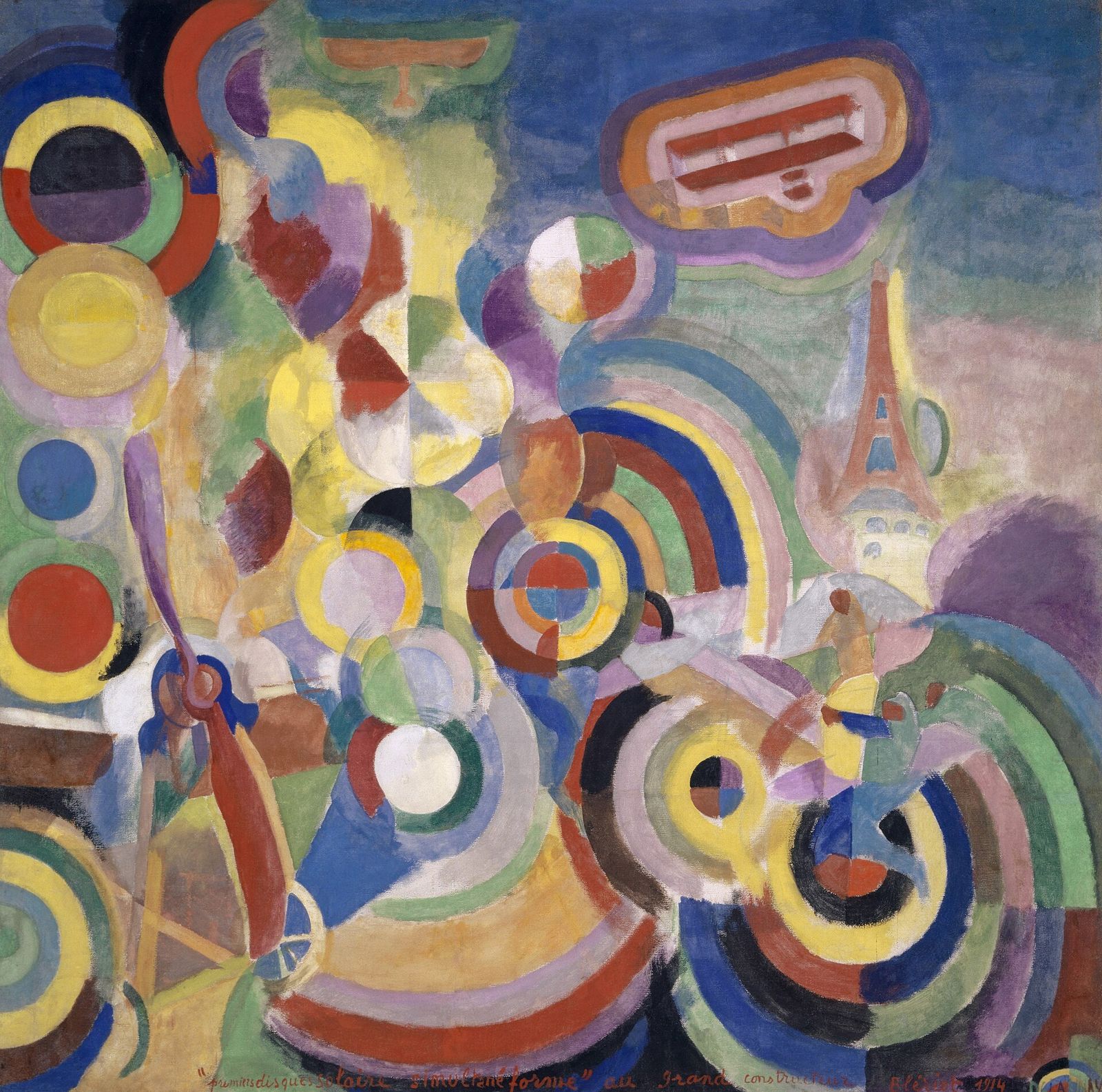
  3. Room 03Orphism1912–1914

    Overlapping rings and disks of bright color fill the canvas, with a propeller, a small biplane and the Eiffel Tower among them.

    Robert Delaunay

    Homage to Blériot, 1914

    Glue-bound distemper on canvas

    Kunstmuseum Basel · View record ↗

    Public domain, via Wikimedia Commons

    Painting meant to work like music: rings and disks of pure color, and no subject at all.
    Enter room →

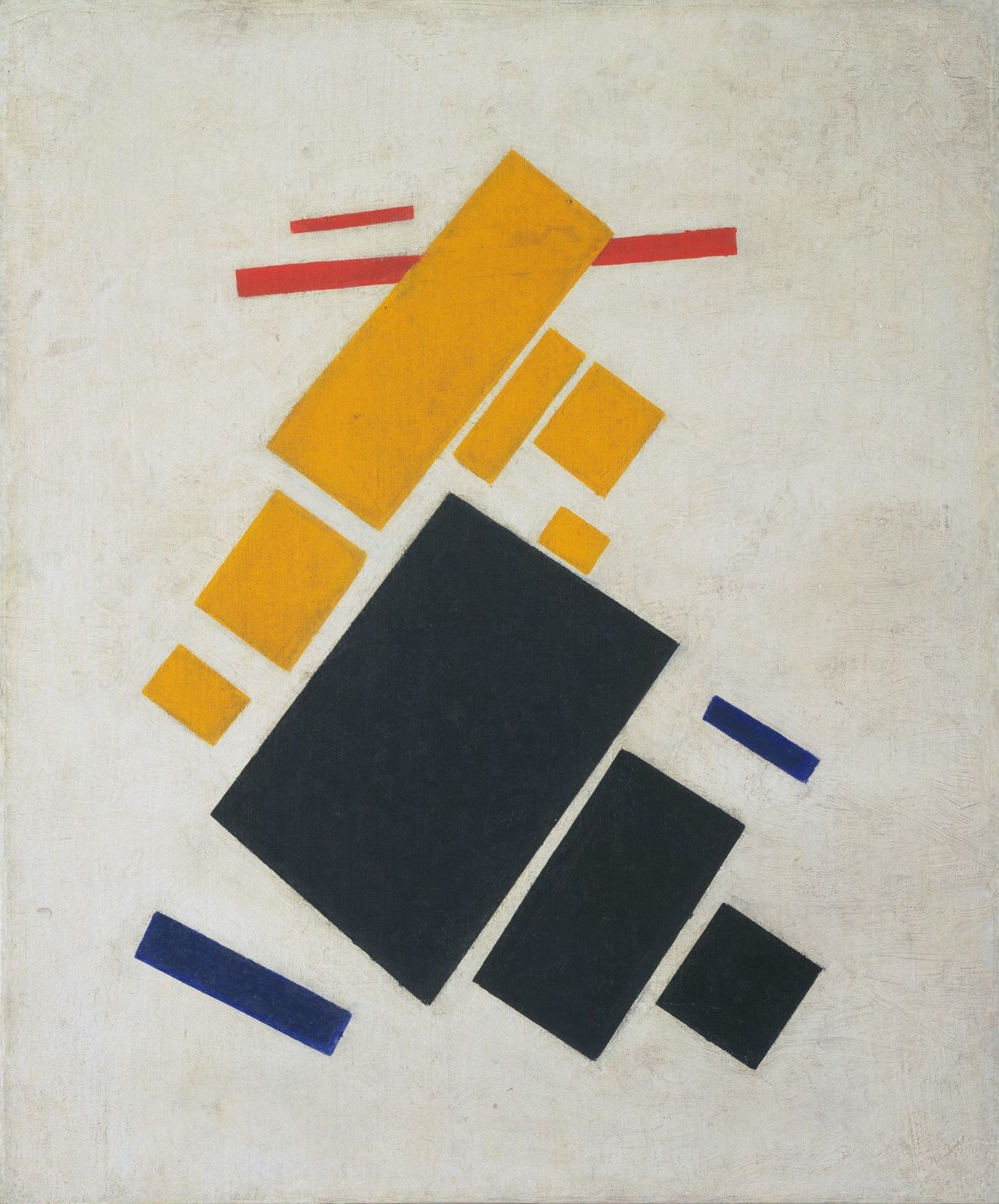
  4. Room 04Suprematism1915–1920s

    Black, yellow and red rectangles of different sizes tilt diagonally across a white ground, like aircraft in formation.

    Kazimir Malevich

    Suprematist Composition: Airplane Flying, 1915

    Oil on canvas

    The Museum of Modern Art, New York · View record ↗

    Public domain, via Wikimedia Commons

    Pure geometric shapes floating on white, with nothing left to describe.
    Enter room →

  5. Room 05Constructivism1915–1930s

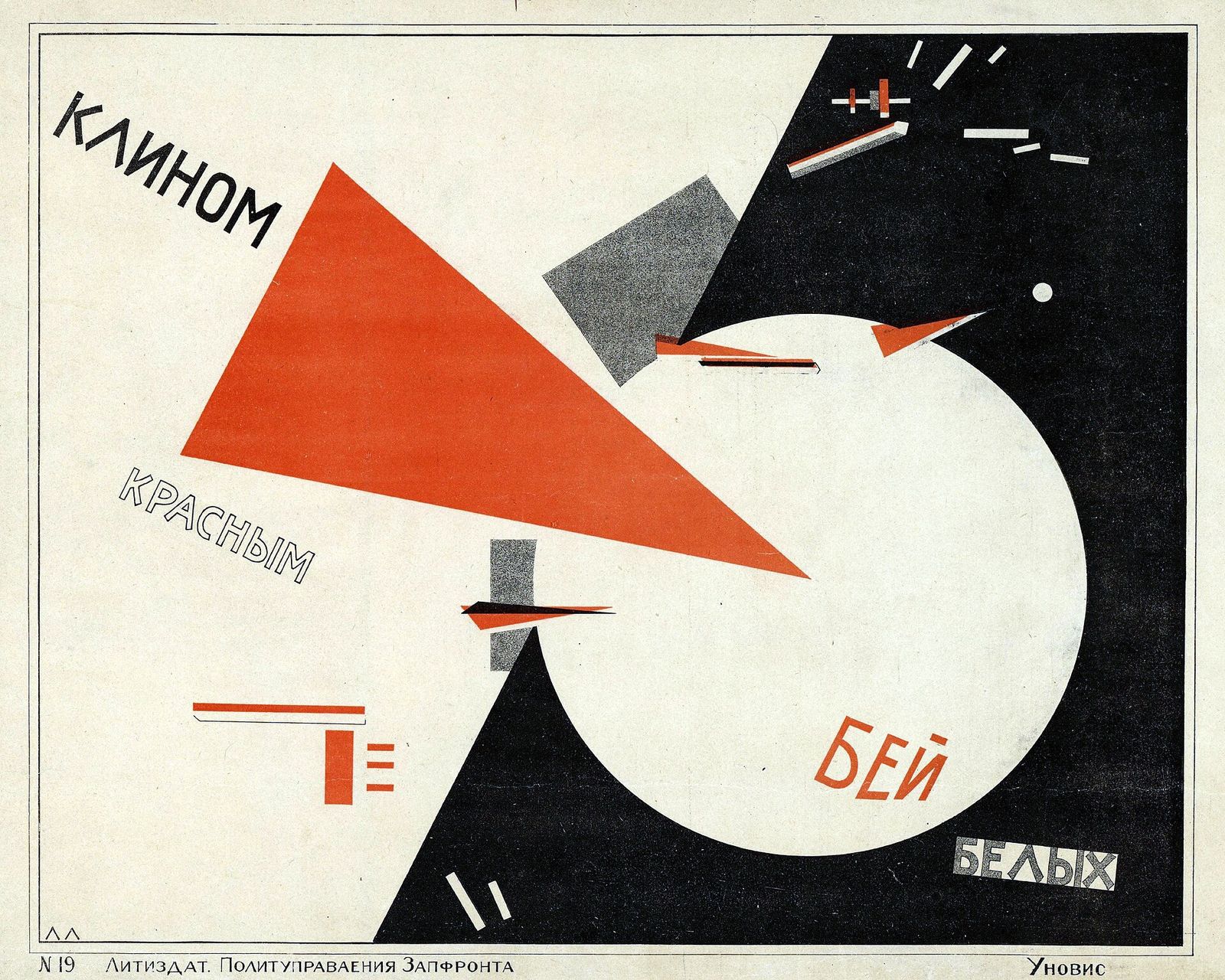
    A red triangle drives into a white circle on a black field, among scattered small shapes and Russian lettering.

    El Lissitzky

    Beat the Whites with the Red Wedge, 1920

    Color lithograph

    Museum of Fine Arts, Boston · View record ↗

    Public domain, via Wikimedia Commons

    Art put to work for a revolution: red wedges, photomontage and type at an angle.
    Enter room →

  6. Room 06Dada1916–1924

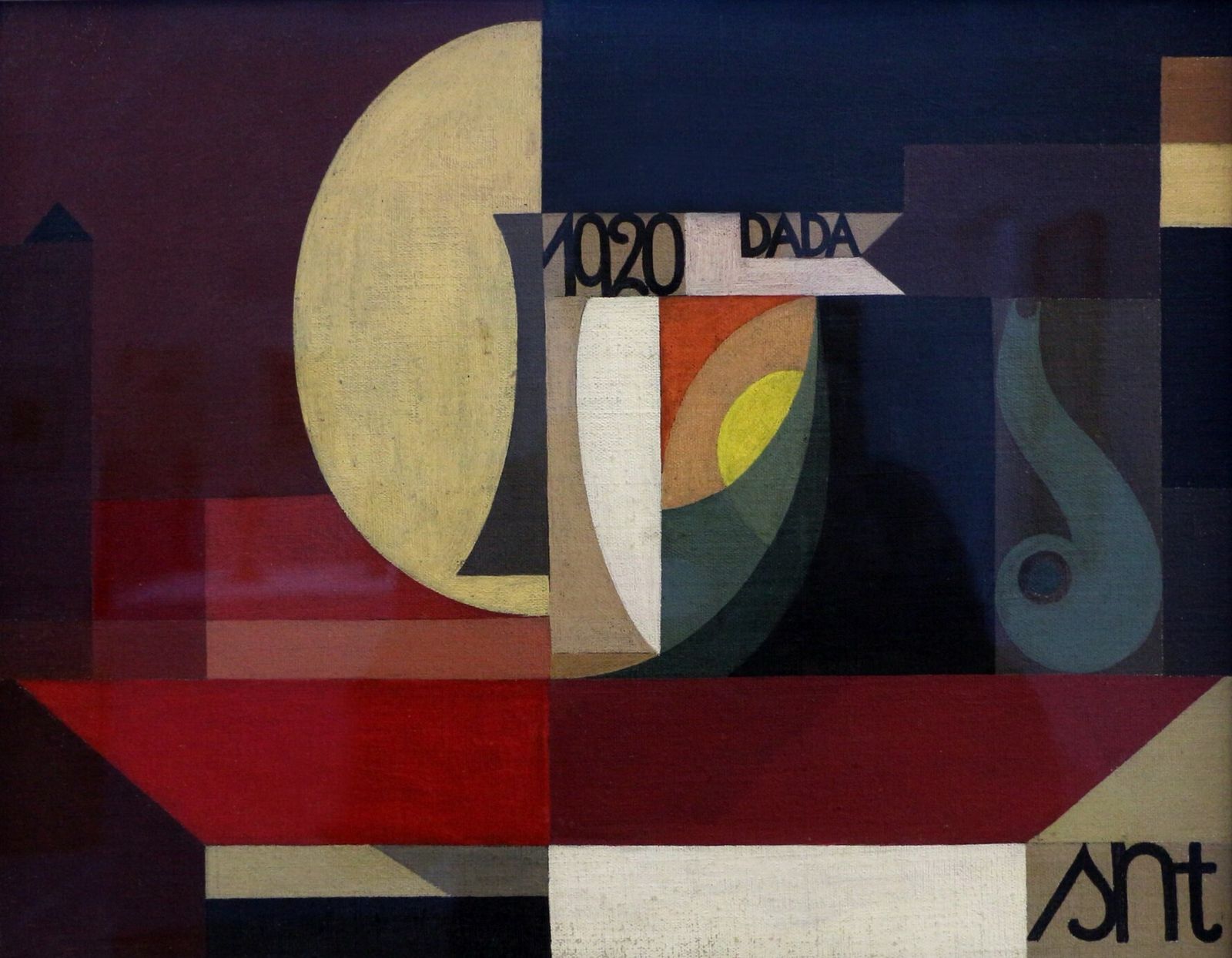
    Overlapping geometric planes in plum, navy, red and cream, with a pale crescent, a spiral and the words 1920 DADA.

    Sophie Taeuber-Arp

    Composition Dada (Tête au plat), 1920

    Oil on canvas mounted on cardboard

    Centre Pompidou, Paris · View record ↗

    Public domain, via Wikimedia Commons

    Artists who answered a world war with nonsense, collage and provocation.
    Enter room →

  7. Room 07De Stijl1917–1931

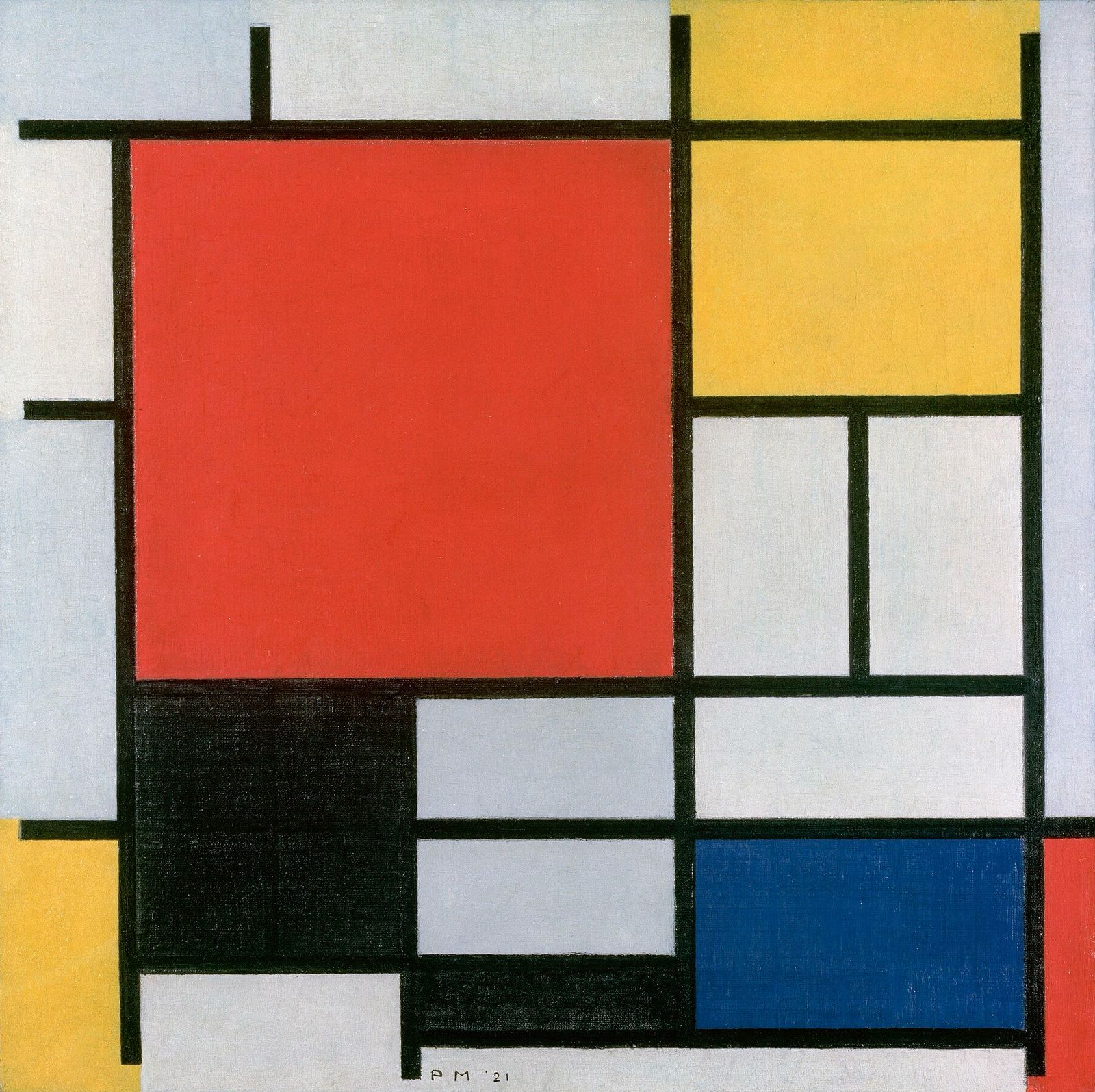
    A large red square dominates a grid of black lines, with yellow, blue, grey and white rectangles around it.

    Piet Mondrian

    Composition with Large Red Plane, Yellow, Black, Gray and Blue, 1921

    Oil on canvas

    Kunstmuseum Den Haag · View record ↗

    Public domain, via Wikimedia Commons

    Straight lines, right angles and primary colors: art reduced to a system.
    Enter room →

  8. Room 08Art Deco posters1925–1930s

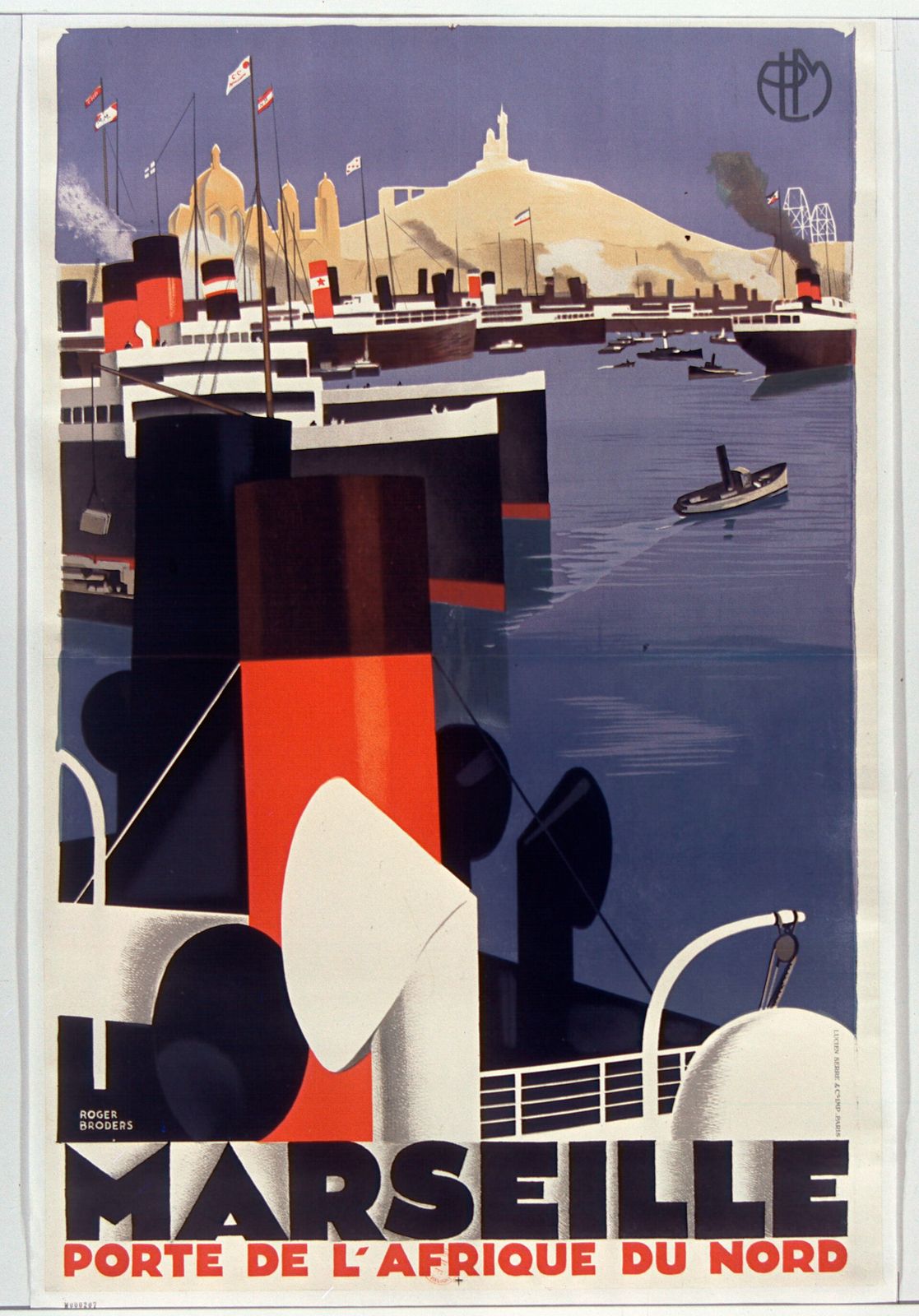
    A towering red-and-black ship's funnel in the foreground, with liners and the hilltop basilica of Marseille behind, above the word MARSEILLE.

    Roger Broders

    Marseille, Porte de l'Afrique du Nord, c. 1929

    Color lithograph

    Victoria and Albert Museum, London · View record ↗

    Public domain, via Wikimedia Commons

    Travel posters of the machine age: liners, mountains and lettering cut like stone.
    Enter room →

  9. Room 09Gutai1954–1972

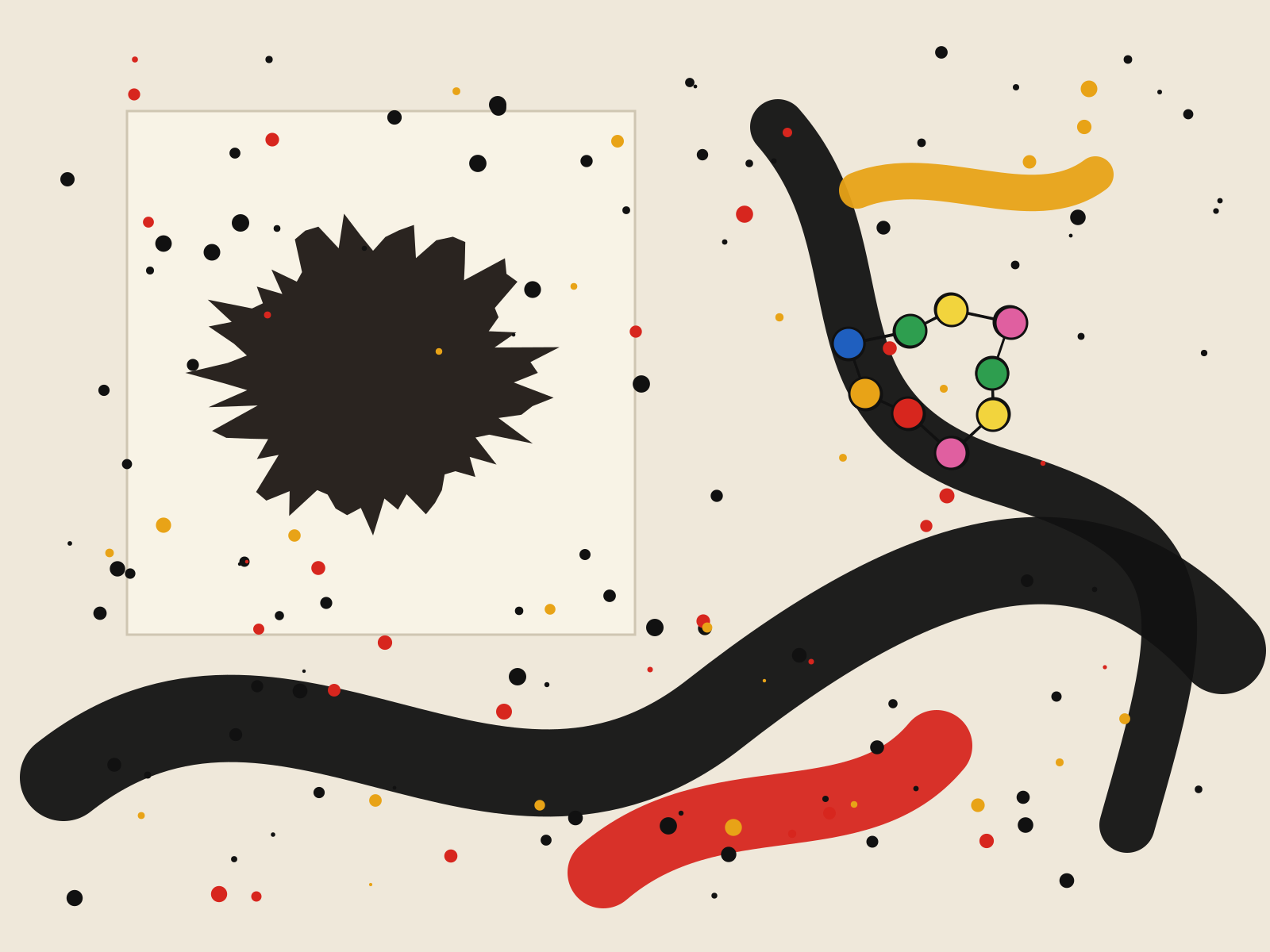
    Original study: thick black and vermilion brushstrokes and splatters on raw paper, a paper screen with a torn black opening, and a string of colored lamps on black wire.

    seojeek

    Study in the manner of Gutai, 2026

    SVG

    An original made for this gallery. The real works are linked below.

    Postwar Japanese artists who painted with their feet, burst through paper and wore electric light.
    Enter room →

  10. Room 10Pop Art1955–1970

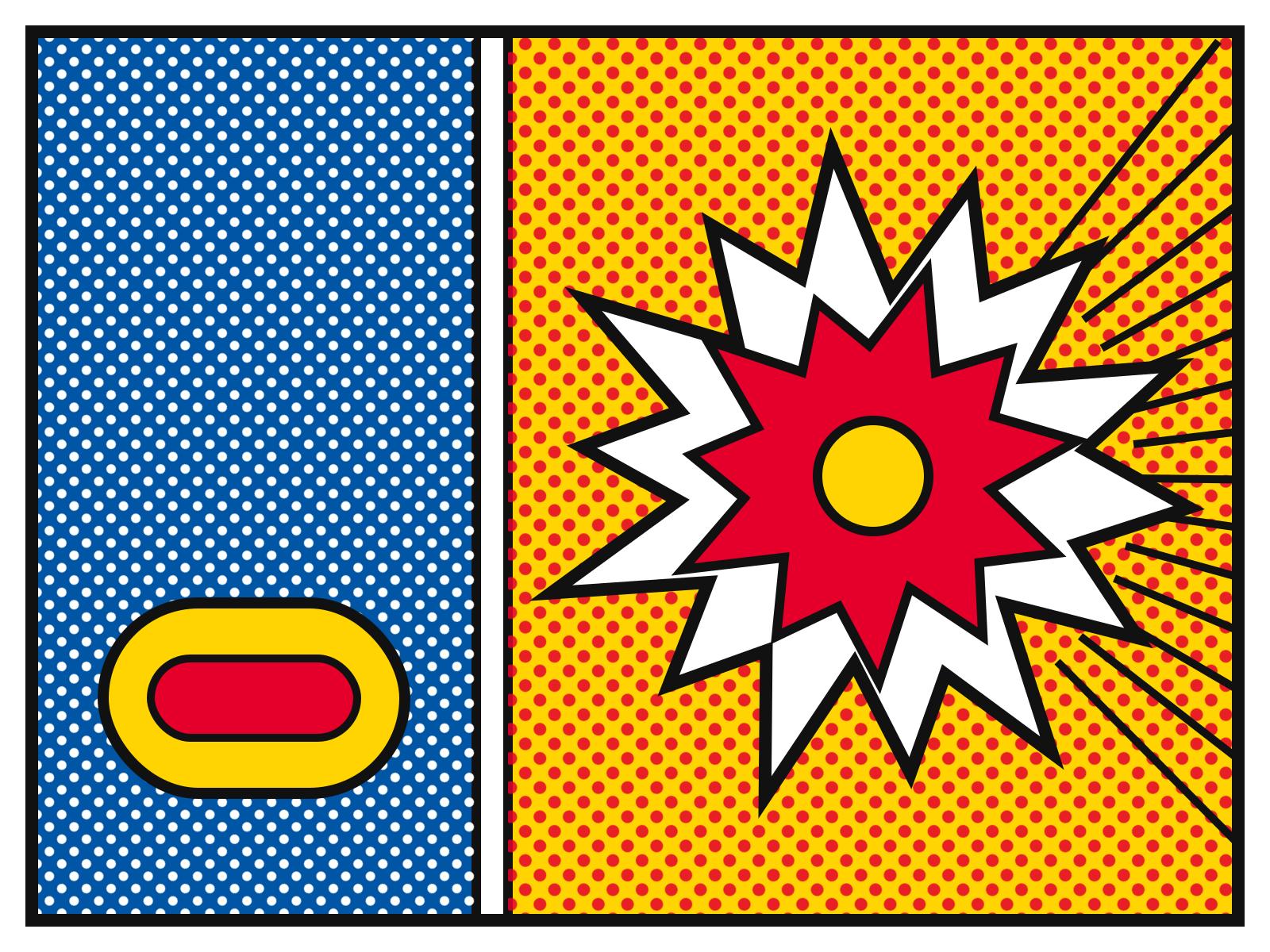
    Original study: a white comic-book burst with a red center on a yellow field of red halftone dots, beside a blue panel of white dots, all with heavy black outlines.

    seojeek

    Study in the manner of Pop Art, 2026

    SVG

    An original made for this gallery. The real works are linked below.

    Comics, ads and supermarket products, blown up and hung on museum walls.
    Enter room →

  11. Room 11Op Art1960s

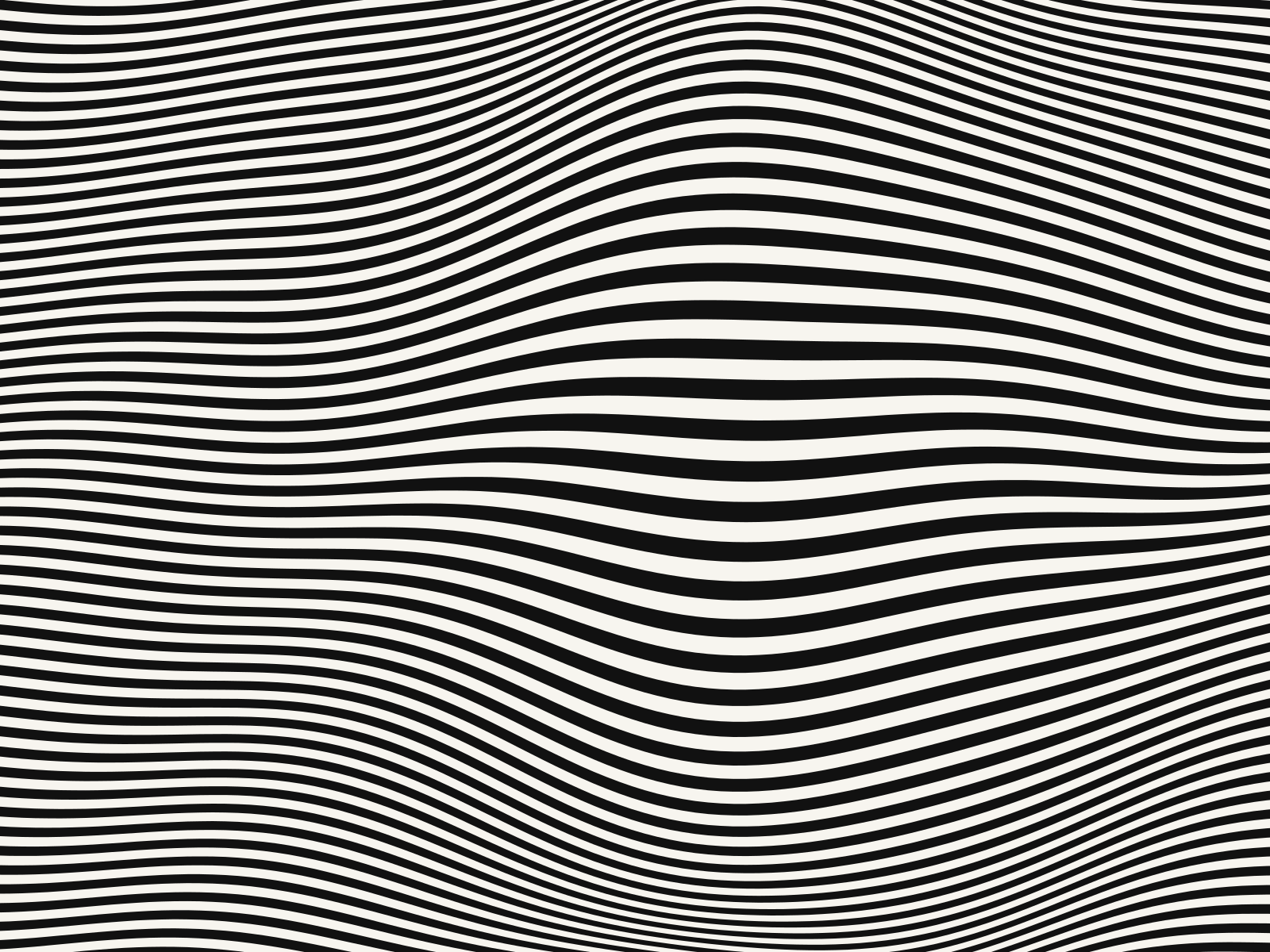
    Original study: black and white horizontal stripes that swell toward the center, as if a sphere pushed through the surface.

    seojeek

    Study in the manner of Op Art, 2026

    SVG

    An original made for this gallery. The real works are linked below.

    Paintings that make your eyes do the work: stripes and patterns that seem to move.
    Enter room →

  12. Room 12Psychedelic posters1966–1969

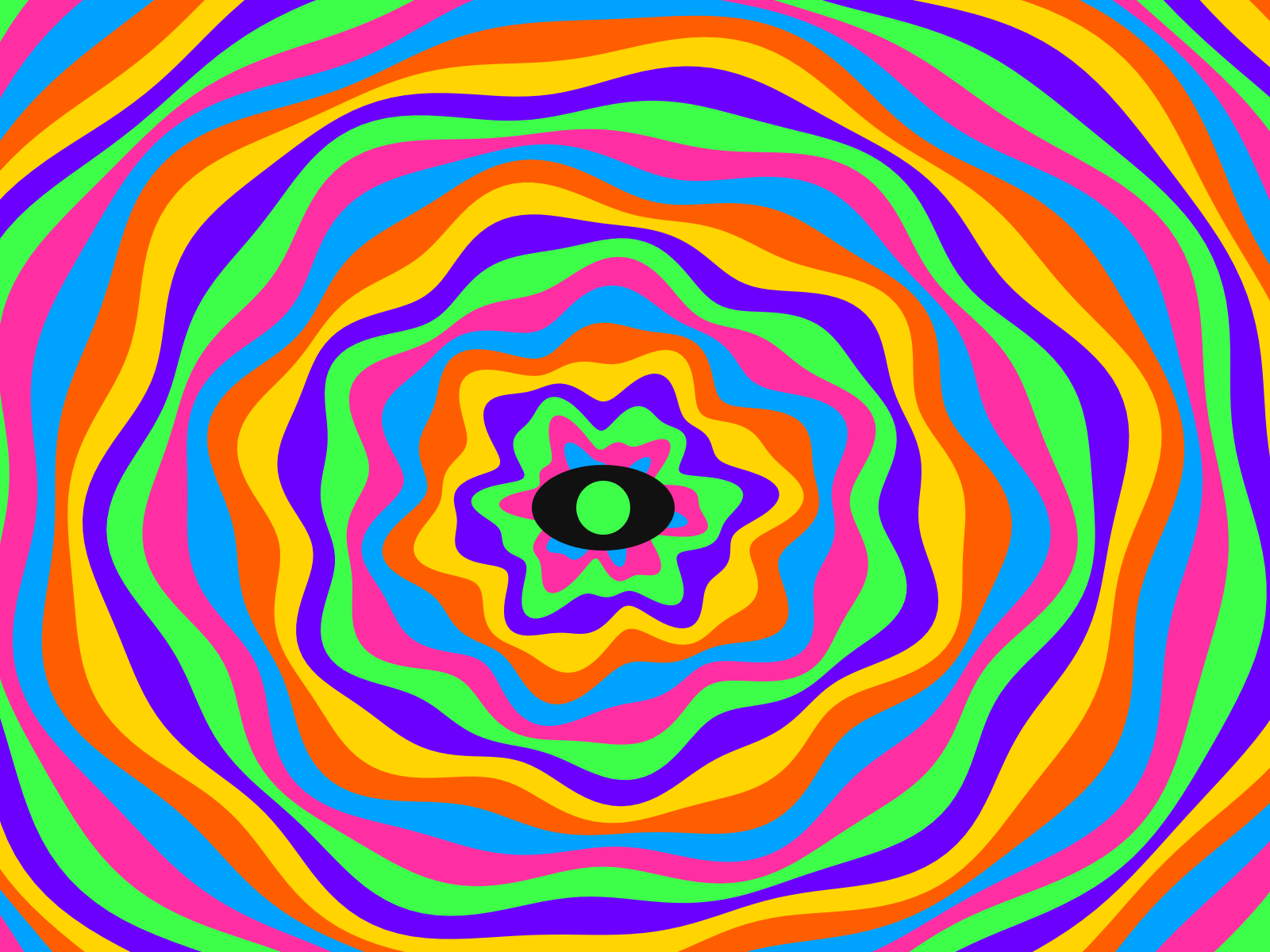
    Original study: wavy concentric rings in orange, blue, magenta, green, violet and yellow around a small black and green eye.

    seojeek

    Study in the manner of psychedelic posters, 2026

    SVG

    An original made for this gallery. The real works are linked below.

    Concert posters for San Francisco's rock ballrooms, with melting lettering and colors that vibrate.
    Enter room →

  13. Room 13Memphis1981–1988

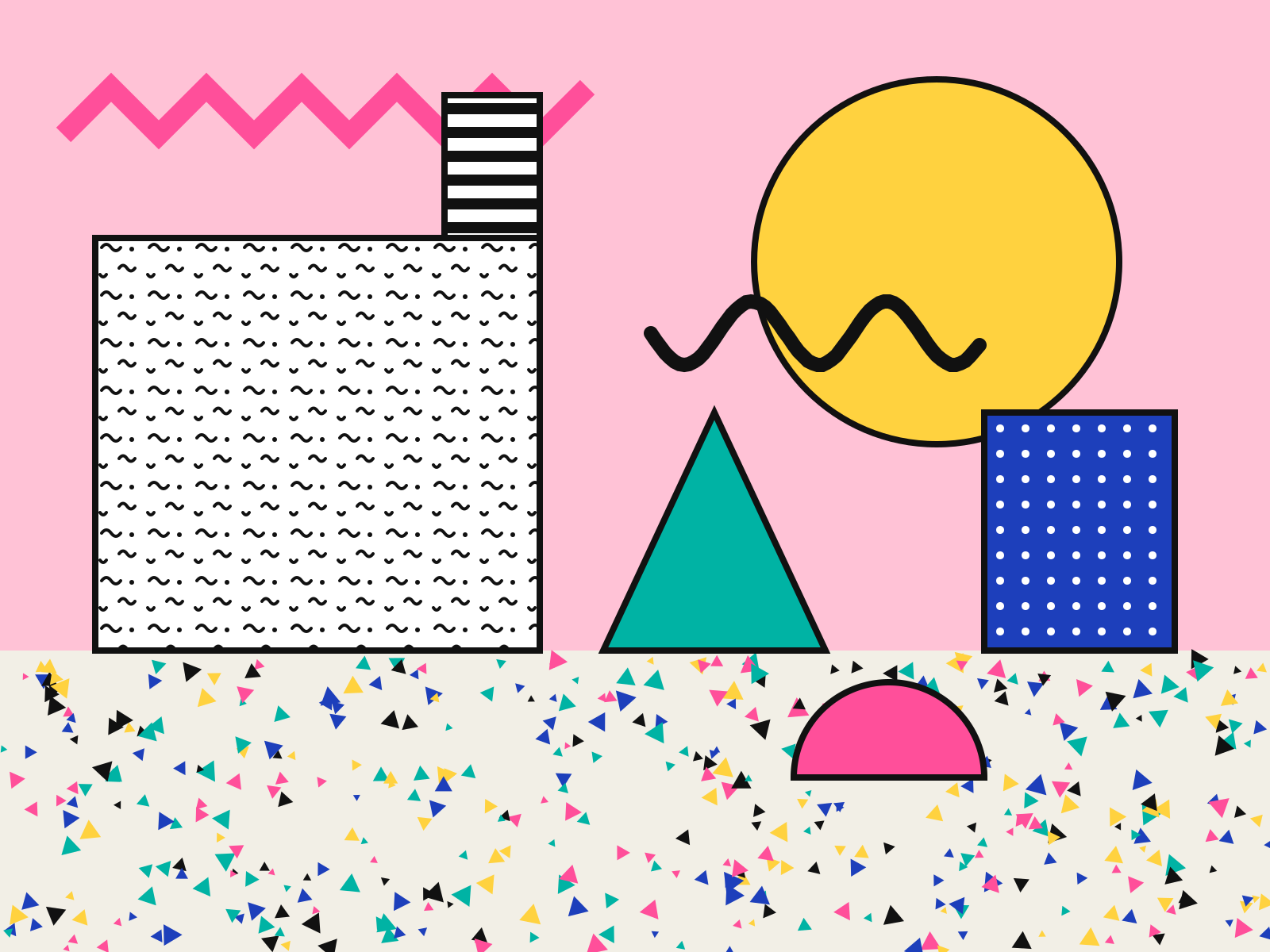
    Original study: a pink ground with a black-and-white squiggle laminate block, a yellow circle, a teal triangle, a blue dotted panel, a pink zigzag and a terrazzo floor.

    seojeek

    Study in the manner of Memphis, 2026

    SVG

    An original made for this gallery. The real works are linked below.

    A Milan design group that threw out good taste: squiggles, laminates and clashing color.

    Enter room →