seojeek

Alex Vallejo, senior software engineer

Gallery · Room 10 · UK and US, 1955–1970

Pop Art

Comics, ads and supermarket products, blown up and hung on museum walls.
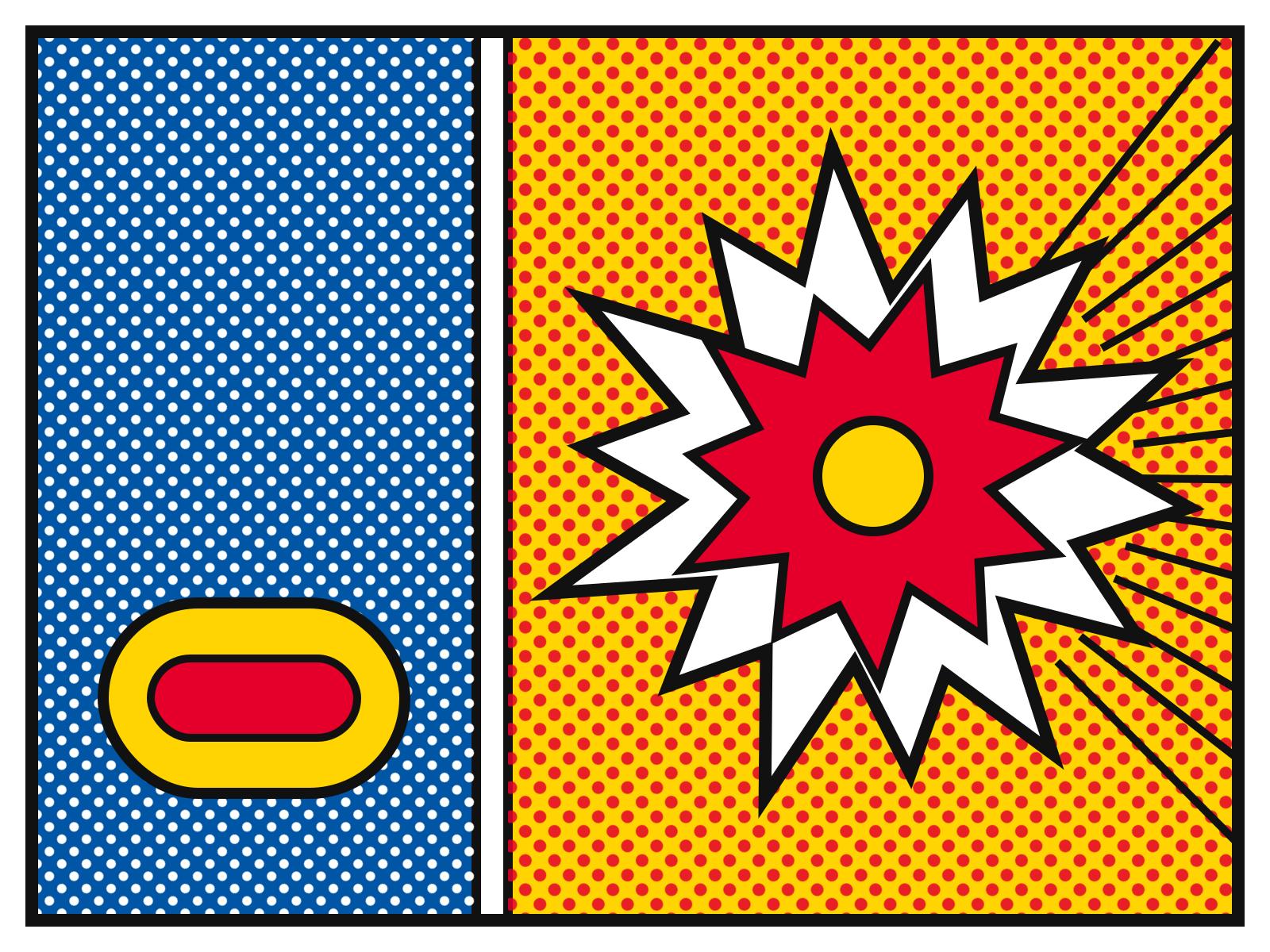
Original study: a white comic-book burst with a red center on a yellow field of red halftone dots, beside a blue panel of white dots, all with heavy black outlines.

seojeek

Study in the manner of Pop Art, 2026

SVG

An original made for this gallery. The real works are linked below.

Wall text

Pop Art emerged in Britain in the mid-1950s, where the Independent Group studied American advertising, films and consumer goods with fascination and irony. In 1957 Richard Hamilton listed what Pop should be: popular, transient, expendable, low cost, mass produced, young, witty, sexy, gimmicky, glamorous and big business.

In New York in the early 1960s, painters made those images their subject. Roy Lichtenstein cropped a page from the 1962 romance comic Secret Hearts into Drowning Girl, trimmed its caption and painted its printed dots at enormous scale. Andy Warhol first showed his 32 soup-can canvases in 1962, set out on shelves like groceries; they look printed but are hand-painted.

Pop erased the line between fine art and commercial design, a line designers had never taken very seriously anyway.

Palette · Typical palette

  • Process red

    #E2231A

  • Process yellow

    #FFD400

  • Comic-book blue

    #1E6FD9

  • Heavy black outline

    #111111

  • Flat white

    #FFFFFF

How to recognize it

  • Imagery from comics, ads, films and packaging

  • Flat, bright colors from commercial printing

  • Halftone and Ben-Day dots at large scale

  • Repetition and seriality

More works

  • Roy Lichtenstein

    Drowning Girl, 1963

    Oil and acrylic on canvas

    The Museum of Modern Art, New York · View record ↗

  • Andy Warhol

    Campbell's Soup Cans, 1962

    Acrylic with metallic enamel paint on canvas, 32 panels

    The Museum of Modern Art, New York · View record ↗

  • Richard Hamilton

    Hommage à Chrysler Corp., 1957

    Oil paint, metal foil and photo collage on wood; the faded photo was replaced with a digital print in 2004

    Tate · View record ↗

What to borrow

  1. 01

    Enlarge the texture of the medium: halftones, pixels or scan lines as a deliberate surface.

  2. 02

    Repetition with small variations makes a strong grid of items.

  3. 03

    Borrow the vernacular of everyday products, then frame it with intent.