Gallery · Room 09 · Japan, 1954–1972
Gutai
Postwar Japanese artists who painted with their feet, burst through paper and wore electric light.
Wall text
The Gutai Art Association formed in 1954 around the painter Jirō Yoshihara, based in Ashiya near Osaka. Yoshihara told its young members to do what had never been done before. The name Gutai means concreteness, and it came from their interest in letting materials speak for themselves.
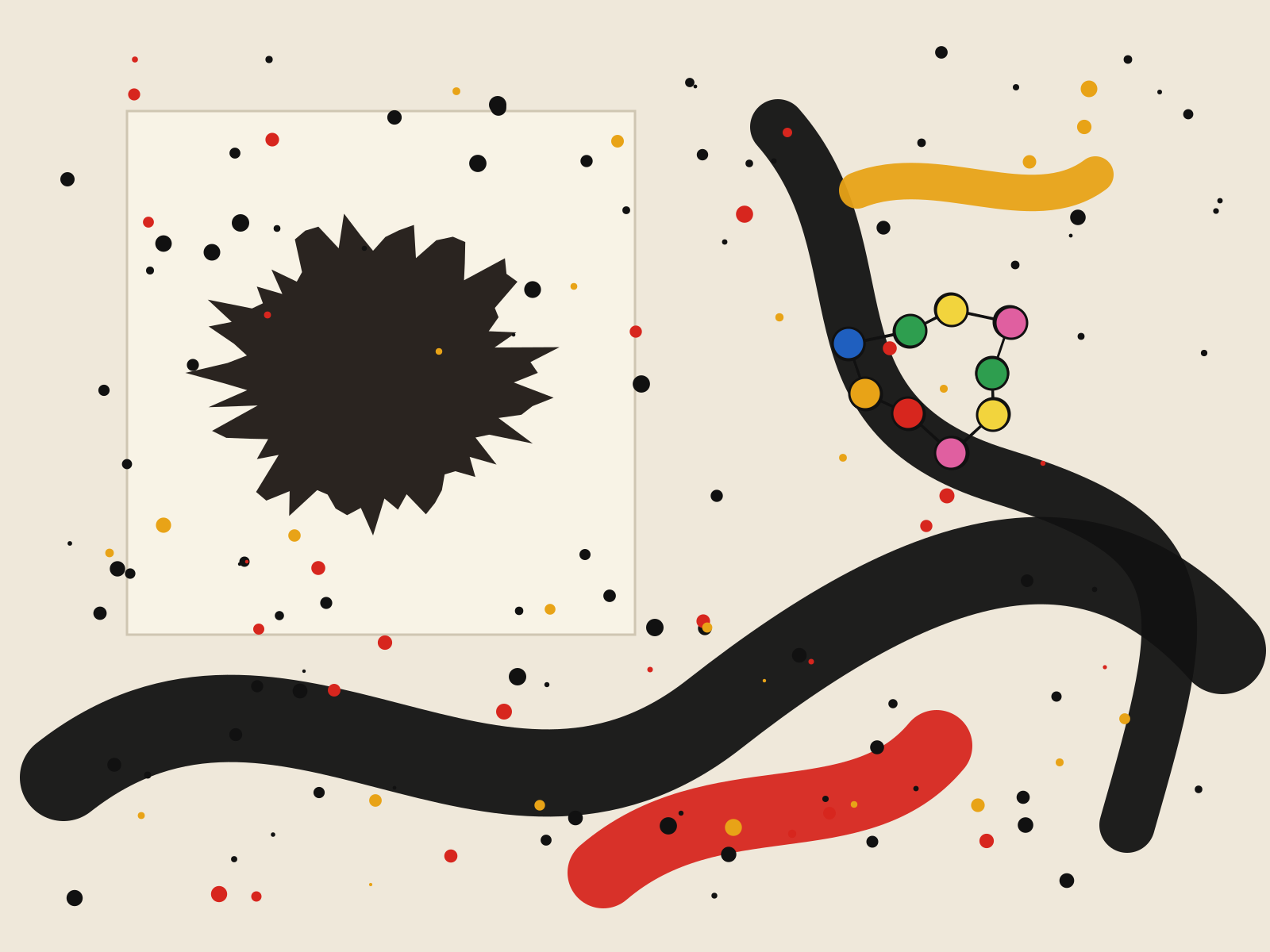
They made art with their bodies. Kazuo Shiraga painted with his feet and, in Challenging Mud (1955), wrestled in a pile of mud. Saburō Murakami burst through paper screens with his body in his Paper-Breaking series of 1956. Atsuko Tanaka's Electric Dress (1956) was a costume of light bulbs, painted yellow, green, red and blue, that were set to flash.
Over eighteen years the group grew to 59 artists, and it dissolved in 1972 after Yoshihara's death. Its actions anticipated performance and installation art by years.