seojeek

Alex Vallejo, senior software engineer

Gallery · Room 11 · Europe and US, 1960s

Op Art

Paintings that make your eyes do the work: stripes and patterns that seem to move.
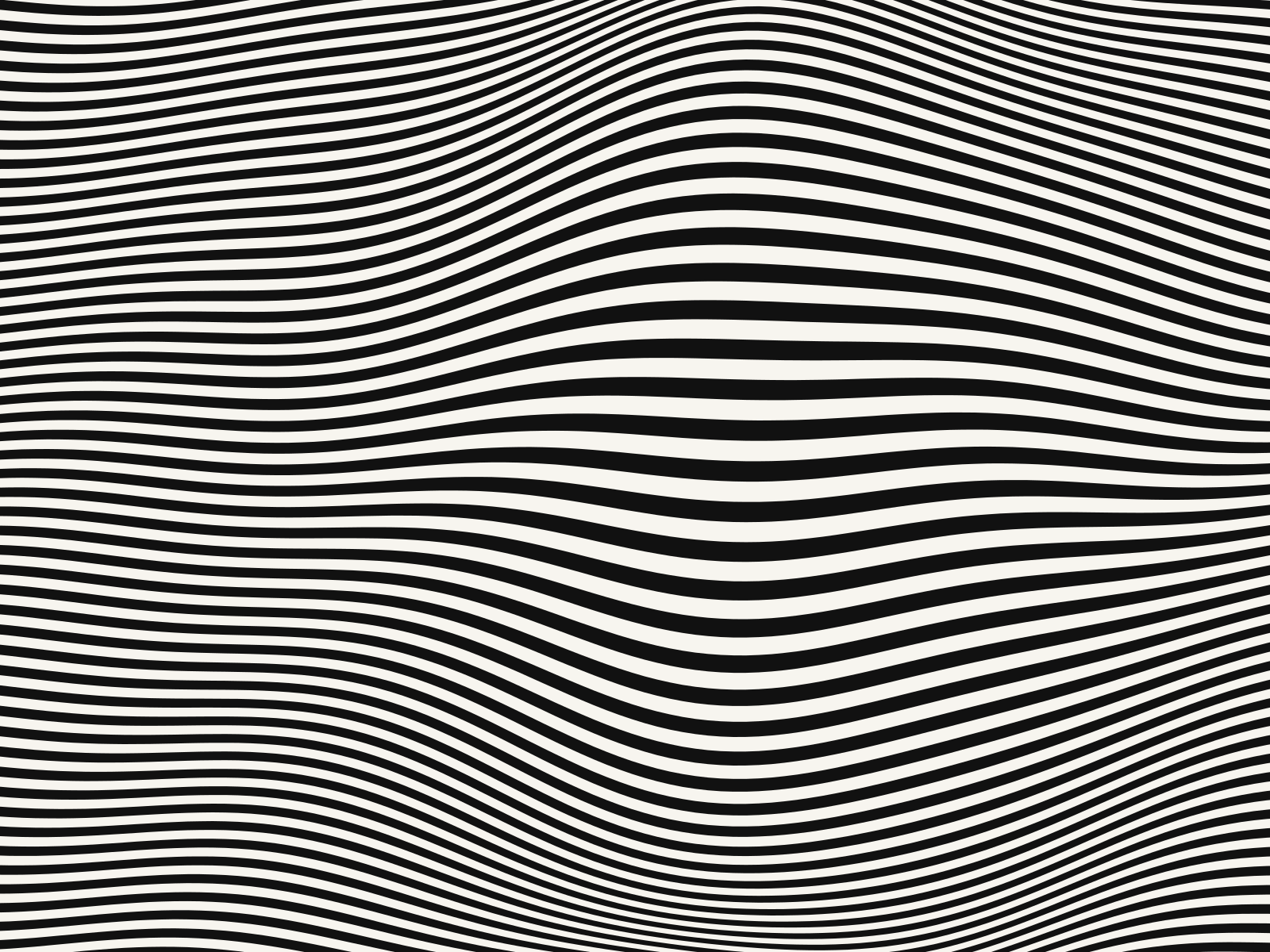
Original study: black and white horizontal stripes that swell toward the center, as if a sphere pushed through the surface.

seojeek

Study in the manner of Op Art, 2026

SVG

An original made for this gallery. The real works are linked below.

Wall text

Op Art uses lines, bands, grids and flat color to trigger the eye's own responses: vibration, flicker, depth and motion where none exists. Victor Vasarely was one of its originators, and Bridget Riley and Jesús Rafael Soto were among its leading figures.

In 1965 MoMA's exhibition The Responsive Eye showed more than 120 works by 99 artists. Its curator, William C. Seitz, presented them less as objects to examine than as generators of responses in the eye and mind. Riley's Current was on the catalogue cover.

The look soon spread into fashion and advertising. Its effects are now everyday design tools, from moiré patterns to loading animations, and they still need care: at full scale, high-contrast stripes can be uncomfortable to look at.

Palette · Typical palette

  • Black

    #000000

  • White

    #FFFFFF

  • Saturated red

    #D7262E

  • Complementary green

    #1E9E4A

  • Cobalt blue

    #2747B8

How to recognize it

  • High-contrast repeating patterns, often black and white

  • Lines or grids that bend, swell or tilt

  • Afterimages, flicker and implied motion

  • Precise, impersonal execution

More works

  • Bridget Riley

    Current, 1964

    Synthetic polymer paint on board

    The Museum of Modern Art, New York · View record ↗

  • Victor Vasarely

    Ondho, 1956-60

    Oil on canvas

    The Museum of Modern Art, New York · View record ↗

  • Richard Anuszkiewicz

    Fluorescent Complement, 1960

    Oil on canvas

    The Museum of Modern Art, New York · View record ↗

What to borrow

  1. 01

    Keep high-contrast stripes to small areas. At scale they vibrate, hurt readability and can cause discomfort.

  2. 02

    Distort a regular grid to suggest depth or focus.

  3. 03

    Pattern alone can imply motion without animation, which also respects reduced-motion settings.