Gallery · Room 19 · Geneva, 1989–1993
The Web
A proposal at CERN that became linked pages anyone could publish, addressed by URL and fetched over HTTP.
Wall text
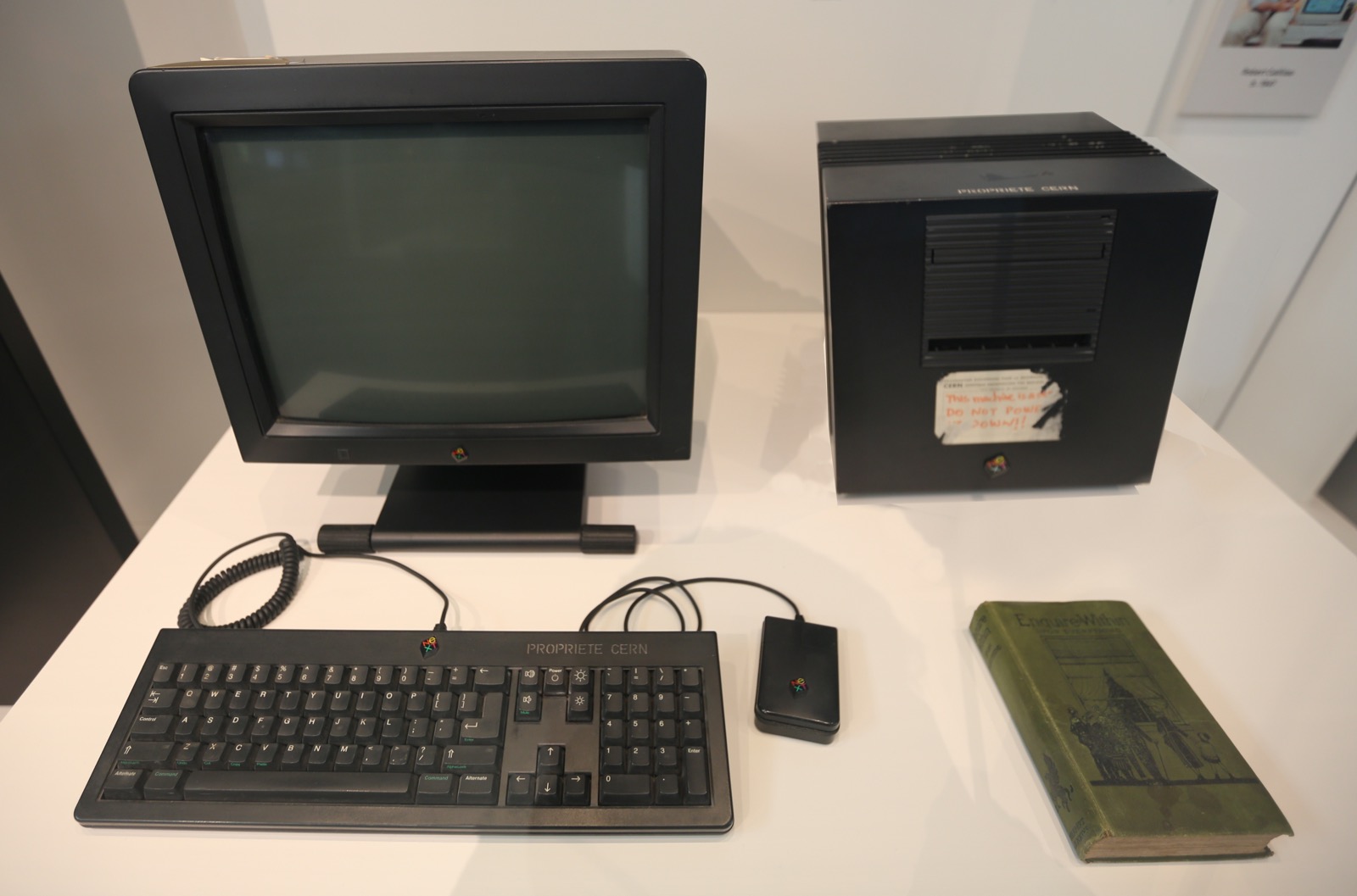
In March 1989, Tim Berners-Lee, a British scientist at CERN, wrote "Information Management: A Proposal." It described a distributed hypertext system to stop the laboratory losing track of its information. His manager, Mike Sendall, wrote "Vague, but exciting" on it and agreed to buy a NeXT computer.
By Christmas 1990, Berners-Lee had defined the Web's basic parts: HTML for writing pages, HTTP for fetching them and the URL for addressing them. The first website, info.cern.ch, explained the project itself. It ran on the NeXT, which was also the first web server. In August 1991 he announced the software on Internet newsgroups, and on 30 April 1993 CERN put it in the public domain.
Early in 1993, the National Center for Supercomputing Applications at the University of Illinois released Mosaic. It showed pictures inline with the text, instead of in a separate window, and helped carry the Web beyond scientists. Web pages began as structured documents. JavaScript, and later Ajax, which updates part of a page without reloading it, turned many of them into applications.