Gallery · Room 06 · Zürich and Berlin, 1916–1924
Dada
Artists who answered a world war with nonsense, collage and provocation.
Wall text
Dada began in neutral Zürich in the middle of the First World War. In 1916 the writer Hugo Ball opened a satirical nightclub, the Cabaret Voltaire, and the name Dada first appeared that year in his magazine of the same name. Its artists answered the war with nonsense, provocation and chance.
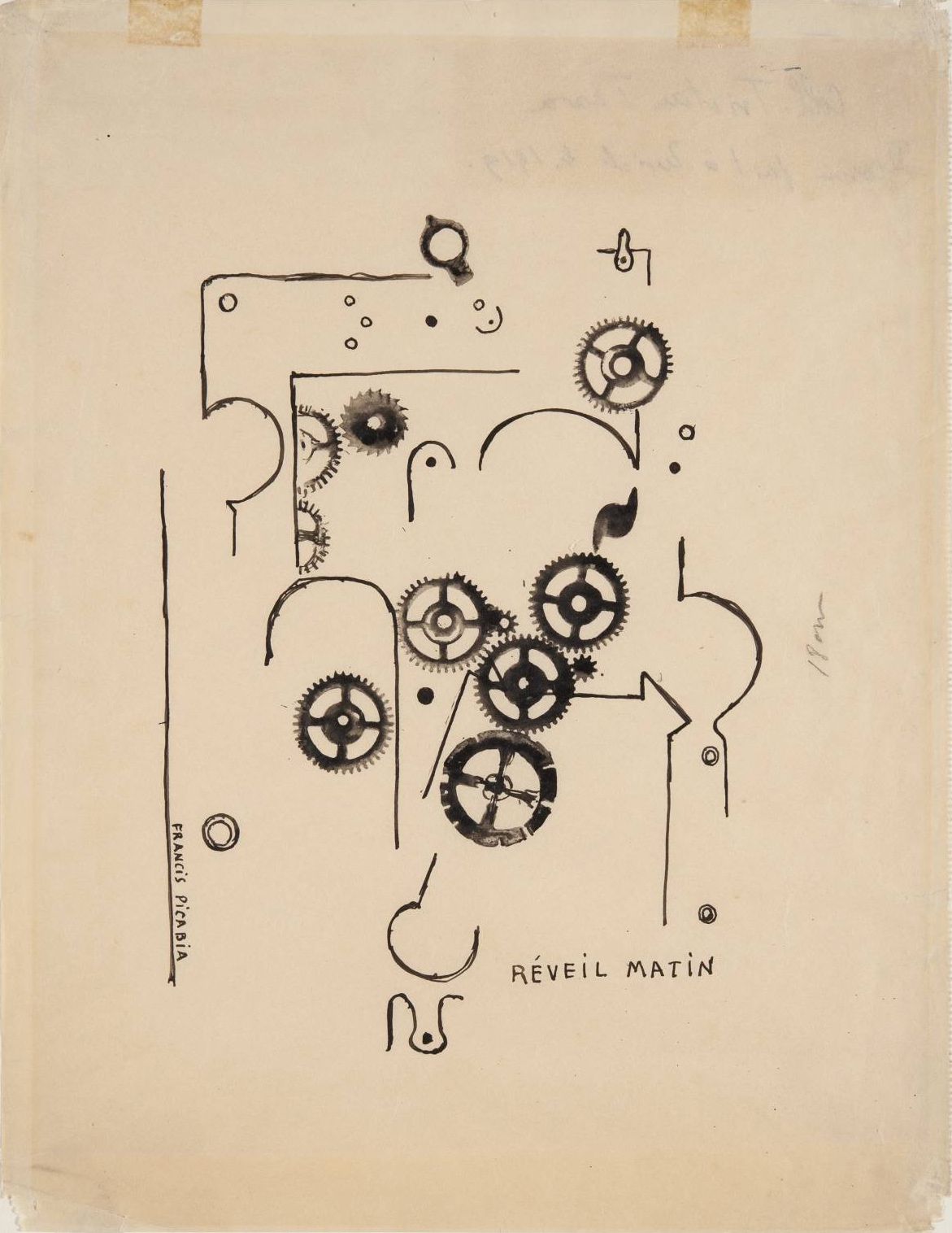
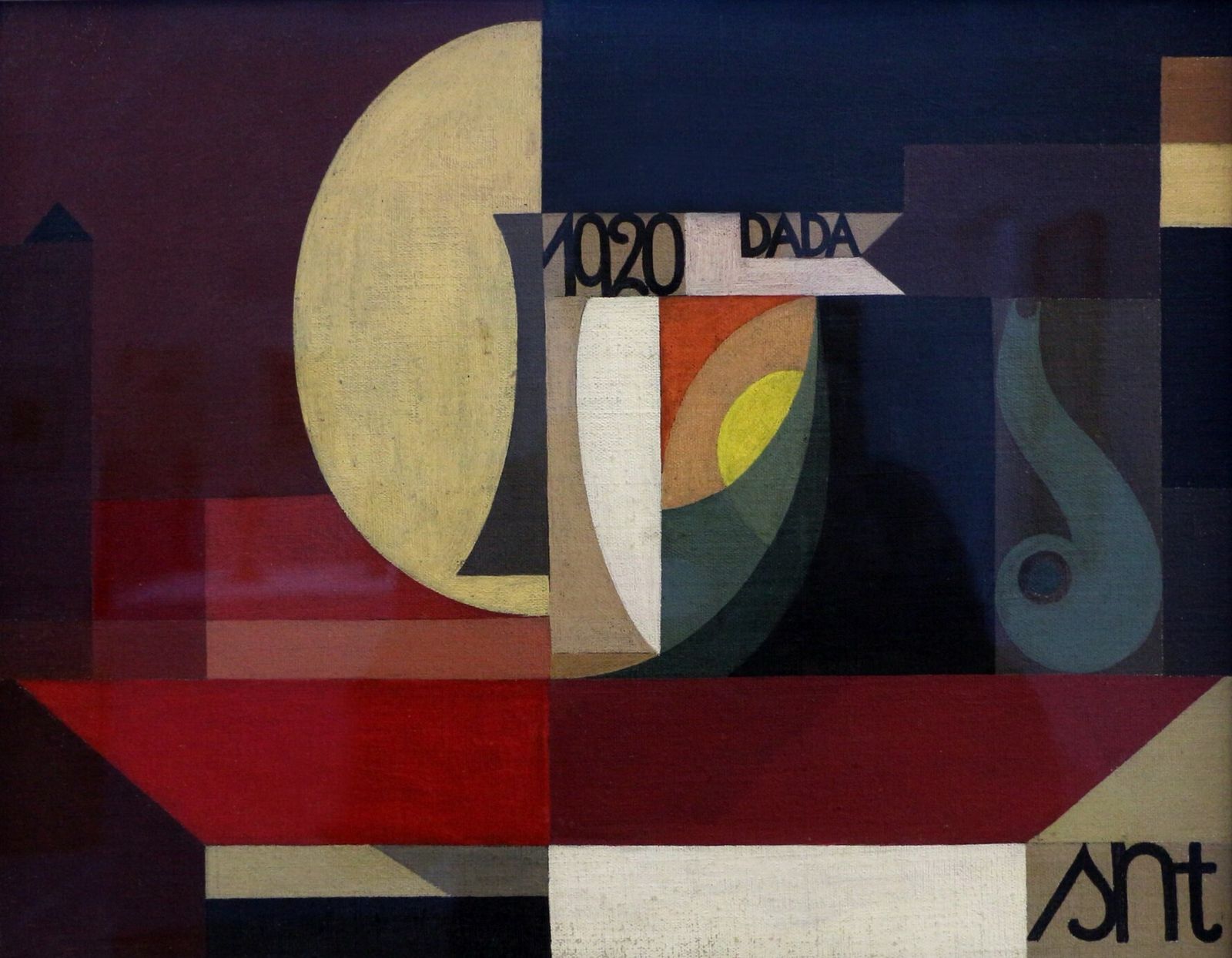
Dada was anti-bourgeois and leaned to the radical left, and it spread fast. Tristan Tzara's magazine Dada reproduced Francis Picabia's machine drawing Alarm Clock in 1919. The First International Dada Fair in Berlin in 1920 crowded almost 200 works into one gallery. Sophie Taeuber-Arp painted, designed textiles and made marionettes; she wrote 1920 and DADA into the painting shown here.
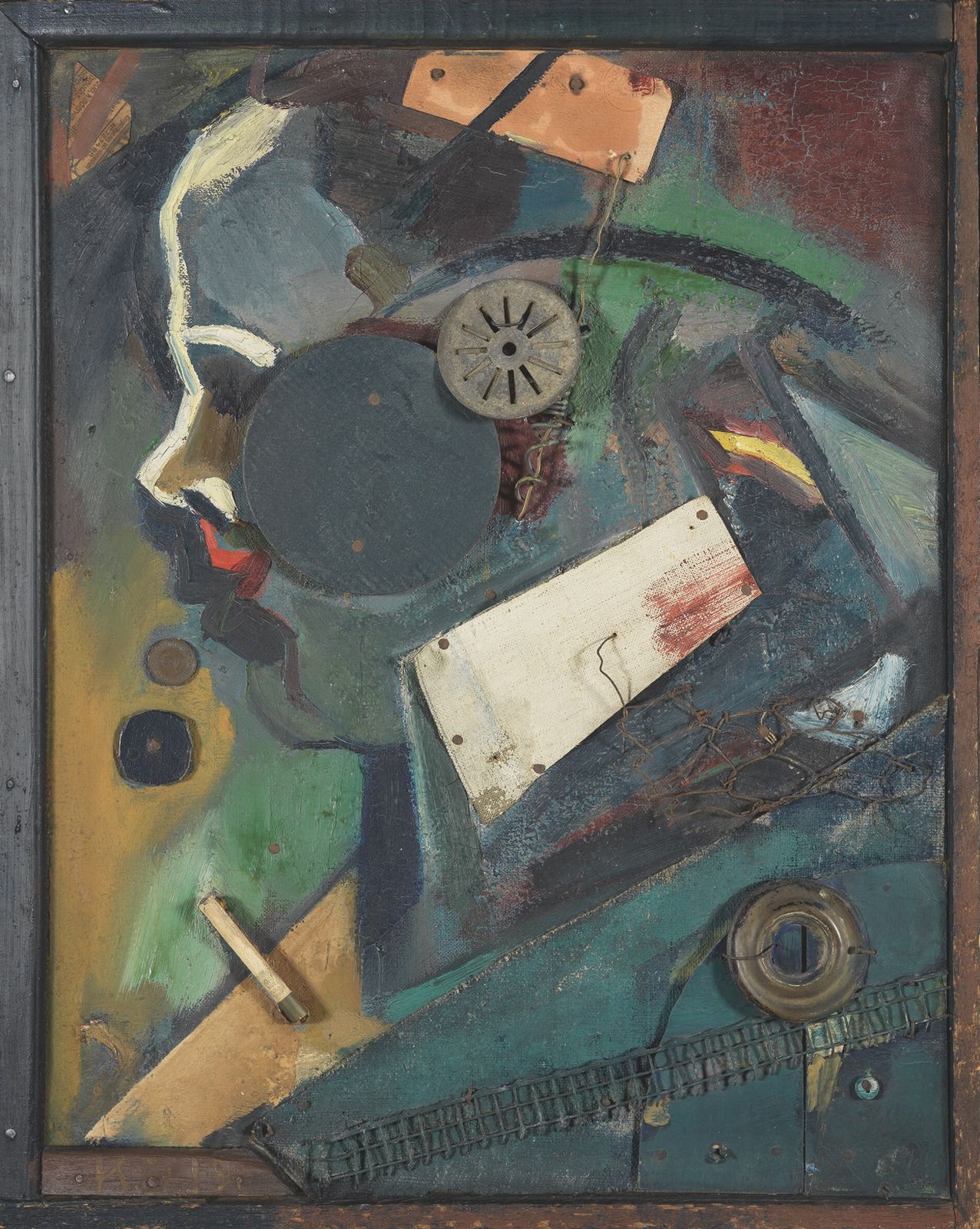
In Hanover, Kurt Schwitters cut the word Merz out of Kommerz and gave it to his collages of tickets, wood and scrap. By the mid-1920s Dada had dissolved, much of it into Surrealism, but collage, chance and the found object are now everyday design tools.