Gallery · Room 07 · Netherlands, 1917–1931
De Stijl
Straight lines, right angles and primary colors: art reduced to a system.
Wall text
De Stijl, Dutch for The Style, began in 1917 as a magazine founded by the painters Theo van Doesburg and Piet Mondrian. Around them were the painters Bart van der Leck and Georges Vantongerloo and the architects Gerrit Rietveld and J. J. P. Oud. They wanted a universal art built from the fewest possible elements.
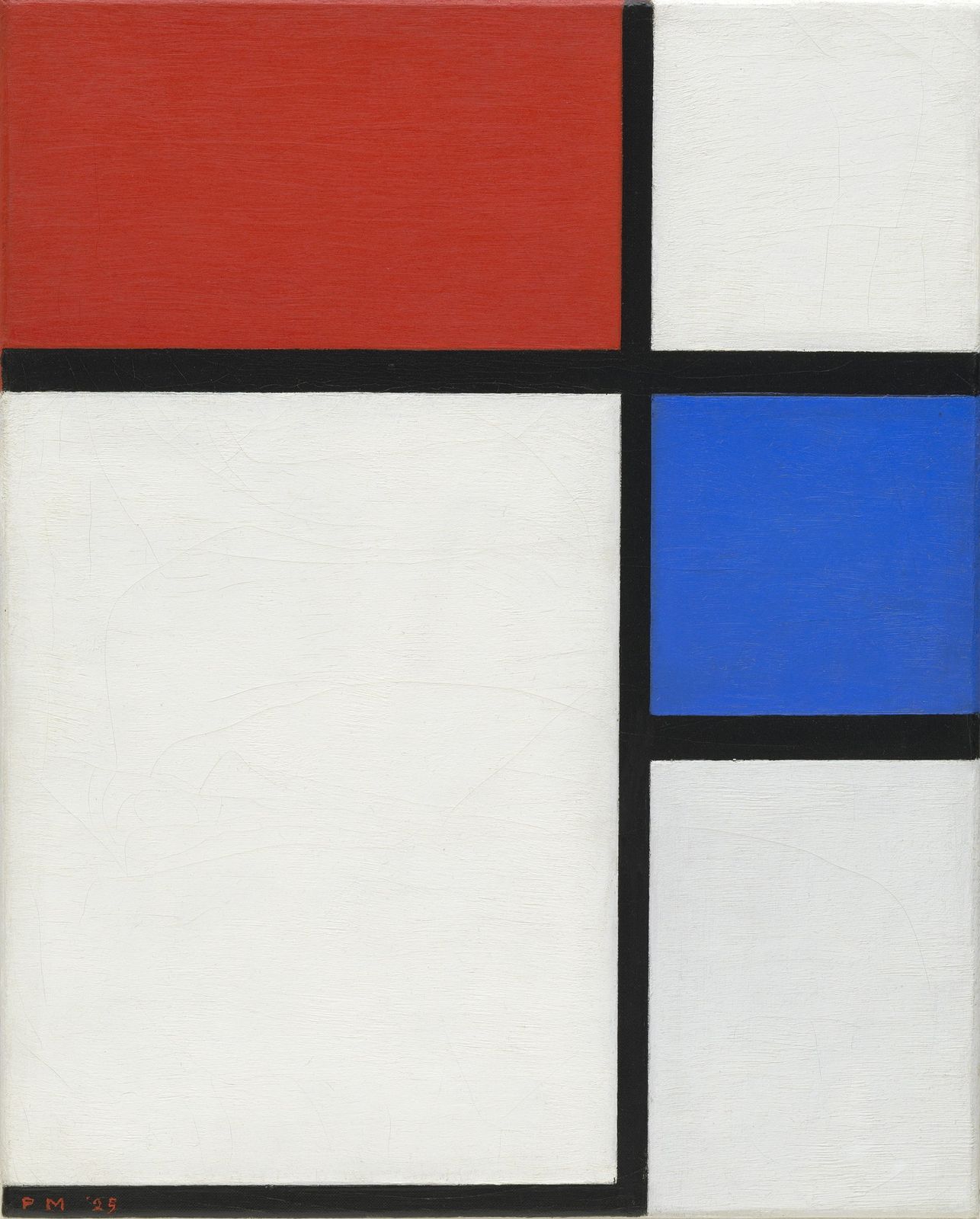
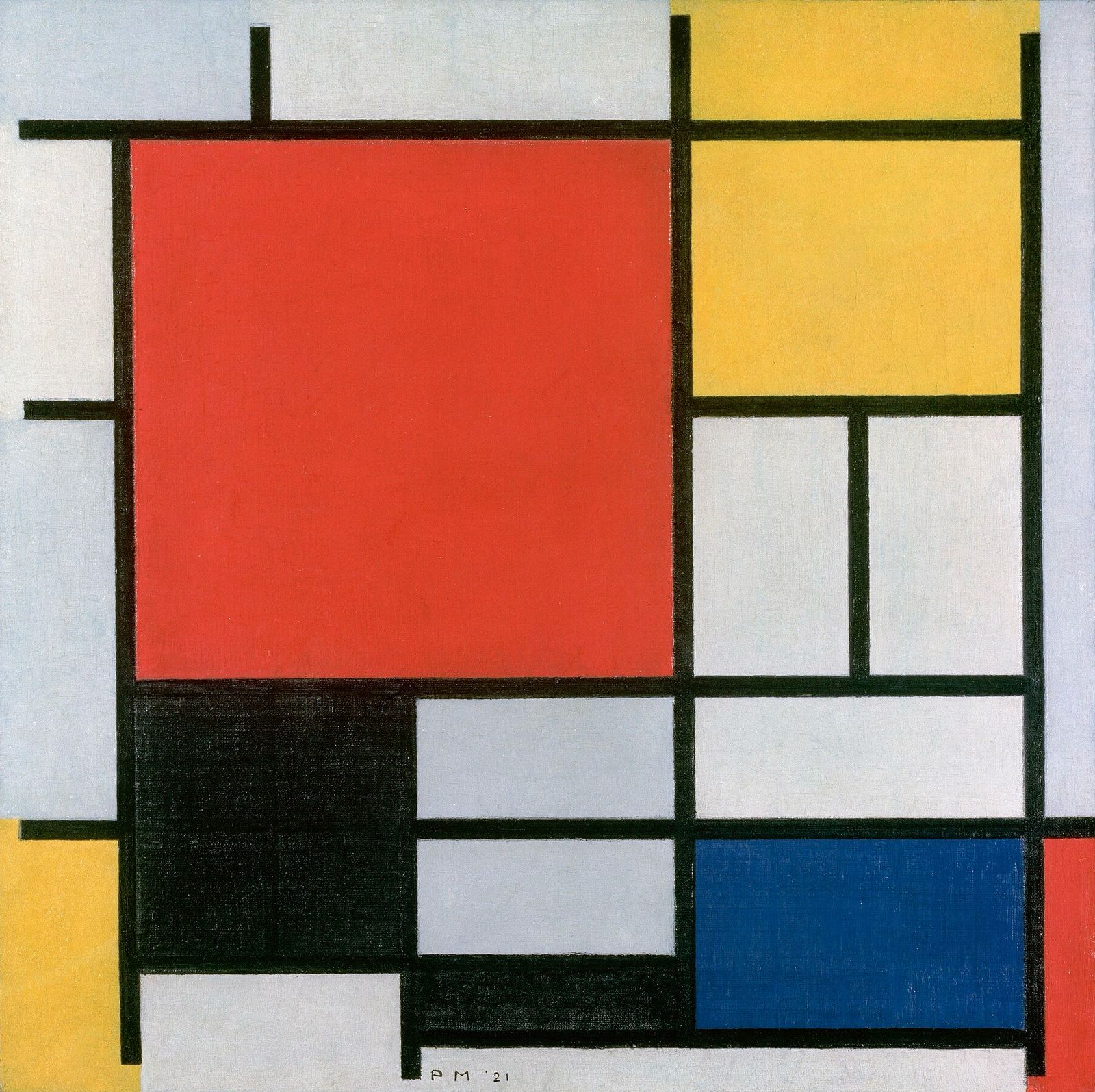
That meant horizontal and vertical lines, rectangles, the three primary colors, and black, white and grey. Mondrian called it neoplasticism. His colors were never quite pure: he kept mixing them so each balanced the others, as in the large red plane of 1921 shown here. Rietveld carried the same system into furniture and houses.
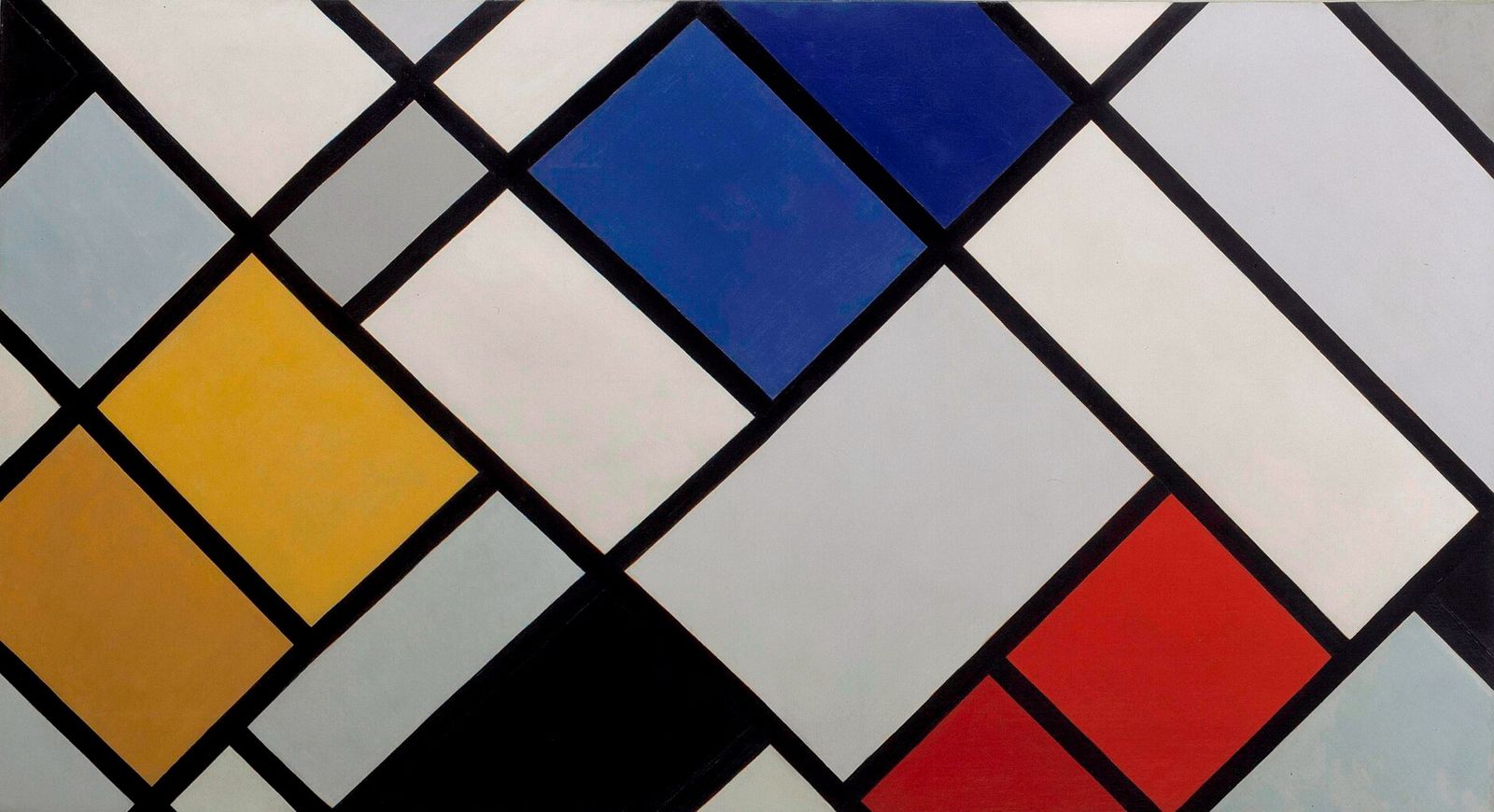
In the mid-1920s van Doesburg tilted his grid forty-five degrees, as in his counter-compositions, and Mondrian left the group over the diagonal. Van Doesburg kept the magazine going until his death in 1931, and with him the movement ended.