Gallery · Room 10 · Weimar, Dessau and Berlin, 1919–1933
Bauhaus
An art school that joined art and craft, then turned to design for industry.
Wall text
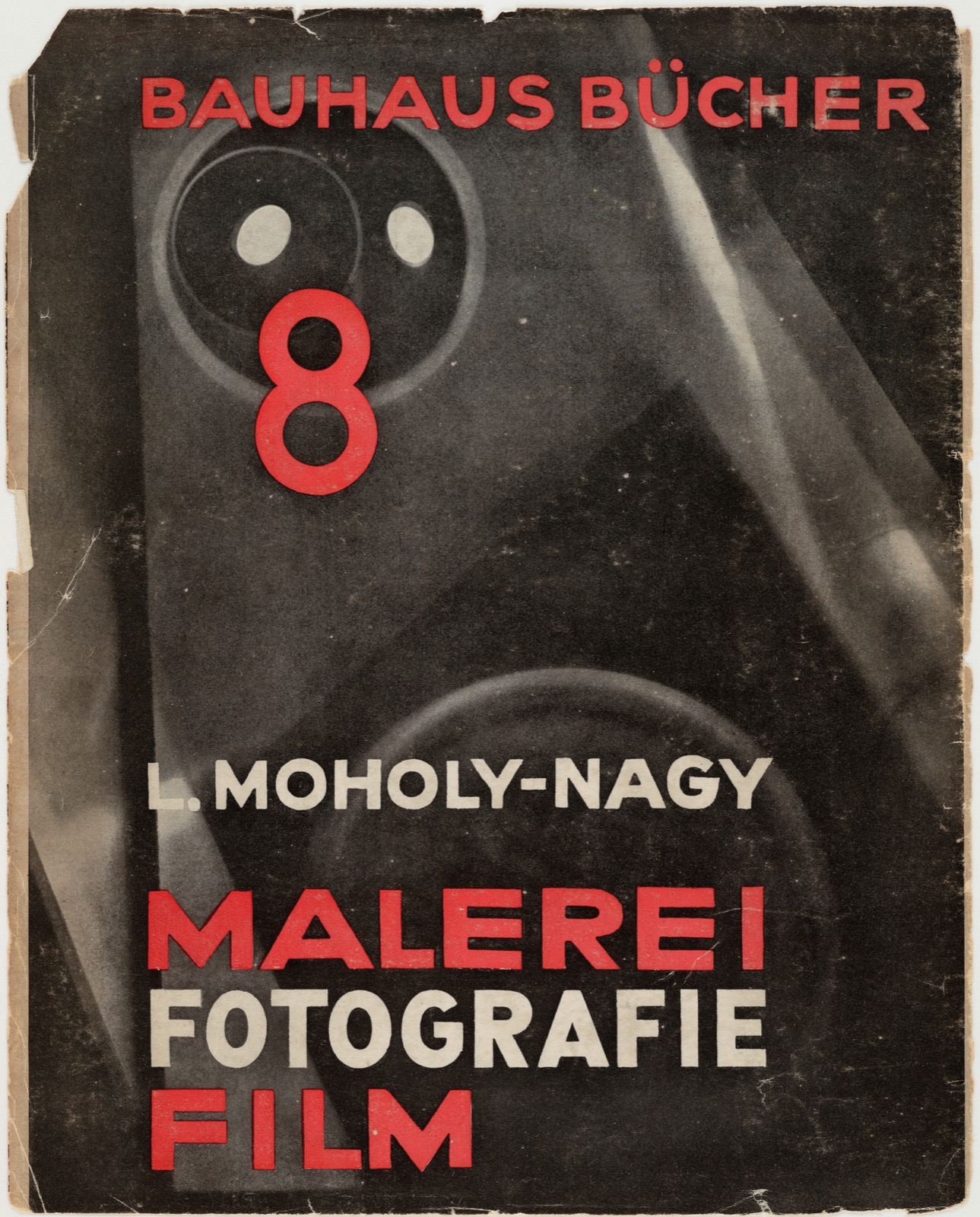
The Bauhaus was a German art school, founded by the architect Walter Gropius in Weimar in 1919. It set out to join art and craft. Its teachers included Paul Klee, Oskar Schlemmer, Wassily Kandinsky and László Moholy-Nagy.
By 1923 Gropius wanted an architecture for a world of machines, radios and fast cars. That year the school held its first large exhibition, with an experimental house and Joost Schmidt's poster in 120 railway stations. In 1925 it moved to Dessau, into a building Gropius designed. Marianne Brandt, who ran the metal workshop from 1928, designed lamps now seen as classics of industrial design. The school moved to Berlin in 1932, and in 1933, under Nazi pressure, its leaders closed it.
Herbert Bayer drew a universal alphabet with no capital letters, and many Bauhaus publications were set in lowercase. After the closure, Gropius taught at Harvard, Moholy-Nagy and Mies van der Rohe went to Chicago, and Josef and Anni Albers took Bauhaus teaching to Black Mountain College. Bayer and Brandt are still in copyright, so their work is not shown here.