seojeek

Alex Vallejo, senior software engineer

Gallery · Room 01 · France, 1905–1908

Fauvism

Painters who used color straight from the tube, as loud as they could make it.
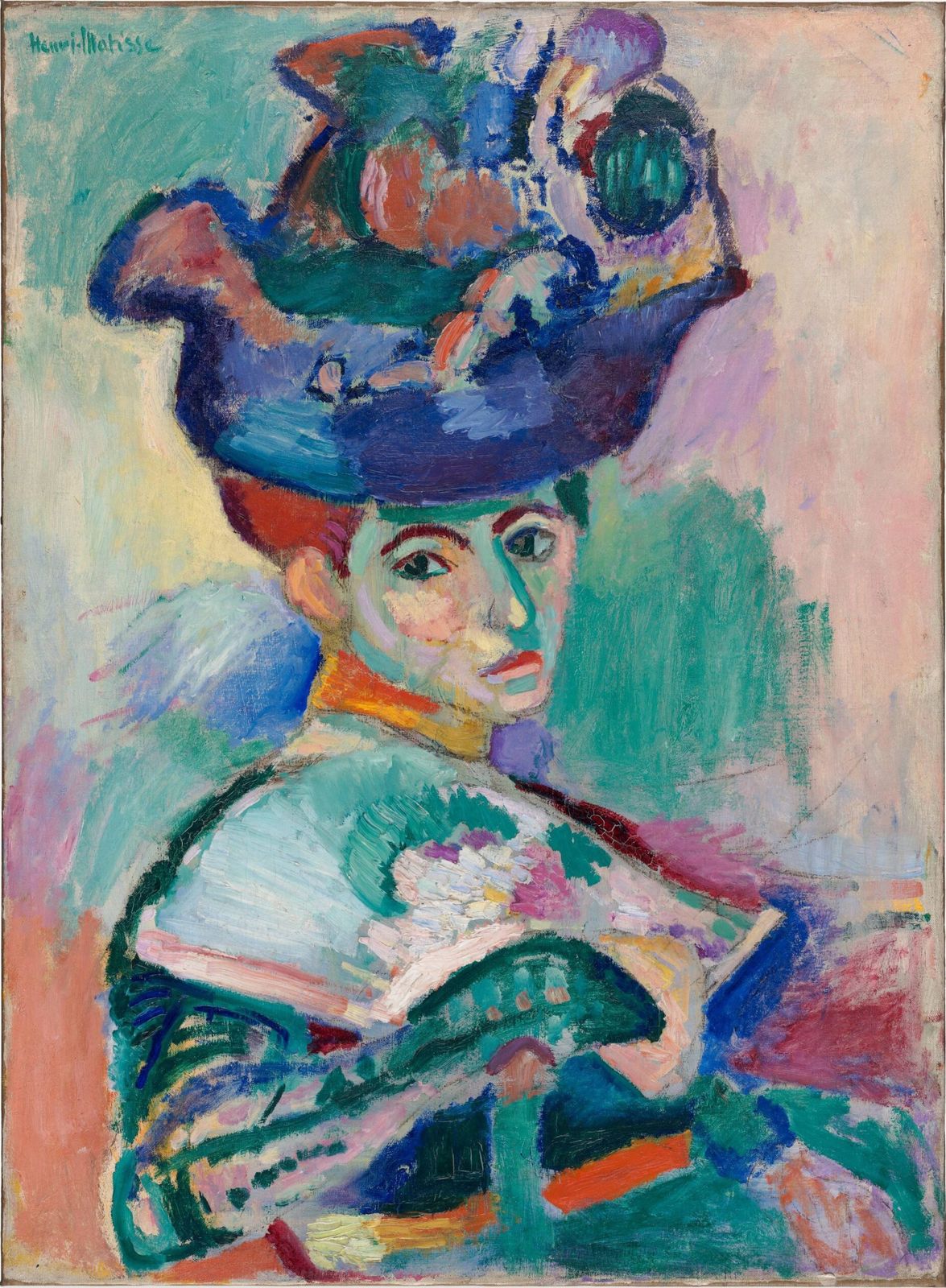
Portrait of a woman in a huge, flower-heaped hat, her face, hands and dress painted in loose patches of green, ochre, violet and blue.

Henri Matisse

Woman with a Hat, 1905

Oil on canvas

San Francisco Museum of Modern Art · View record ↗

Public domain, via Wikimedia Commons

Wall text

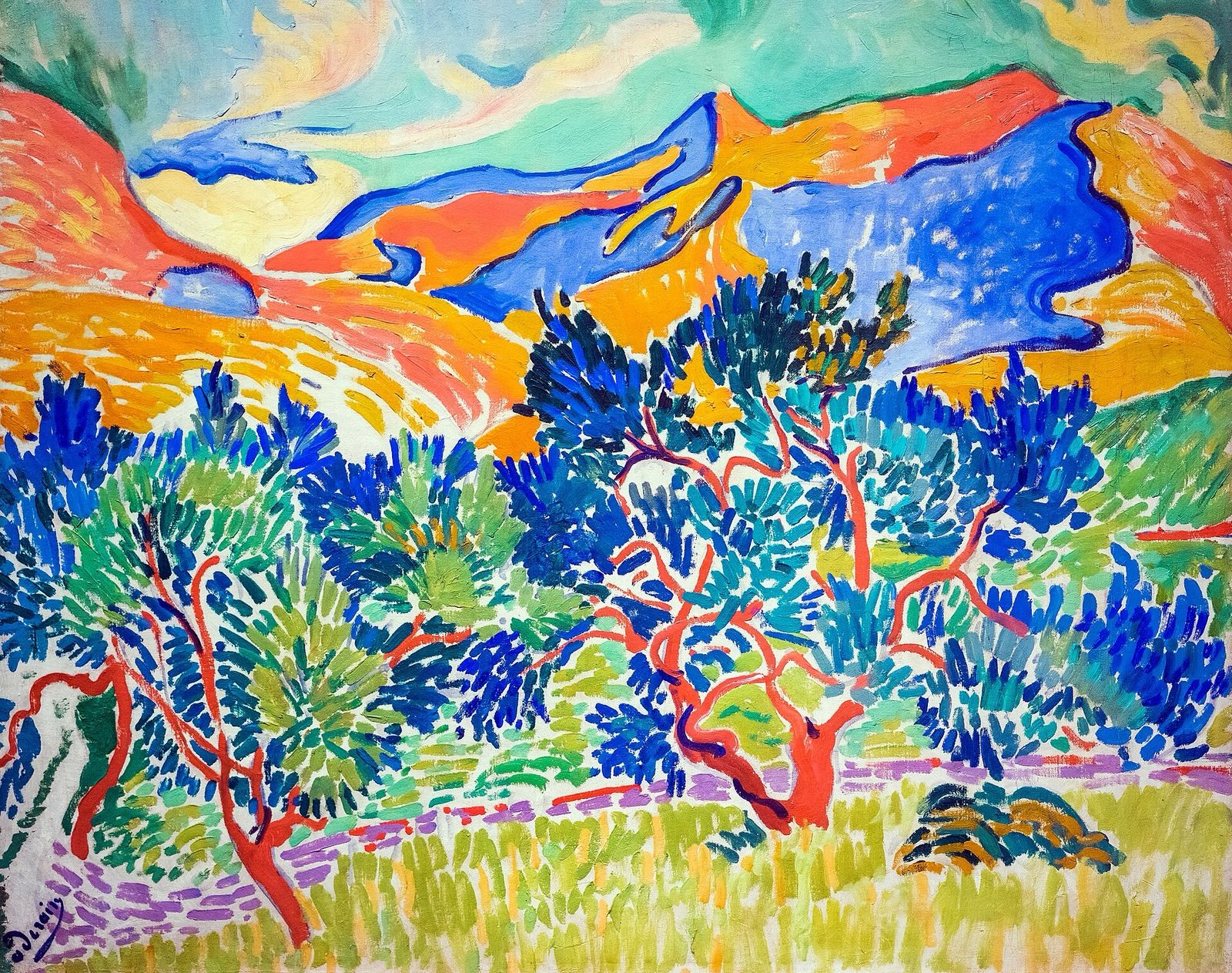
In the summer of 1905 Henri Matisse and André Derain painted side by side in Collioure, a fishing port on the Mediterranean. They used unmixed color, often squeezed straight from the tube, in loose, separate dabs, and they stopped asking color to describe what things really looked like.

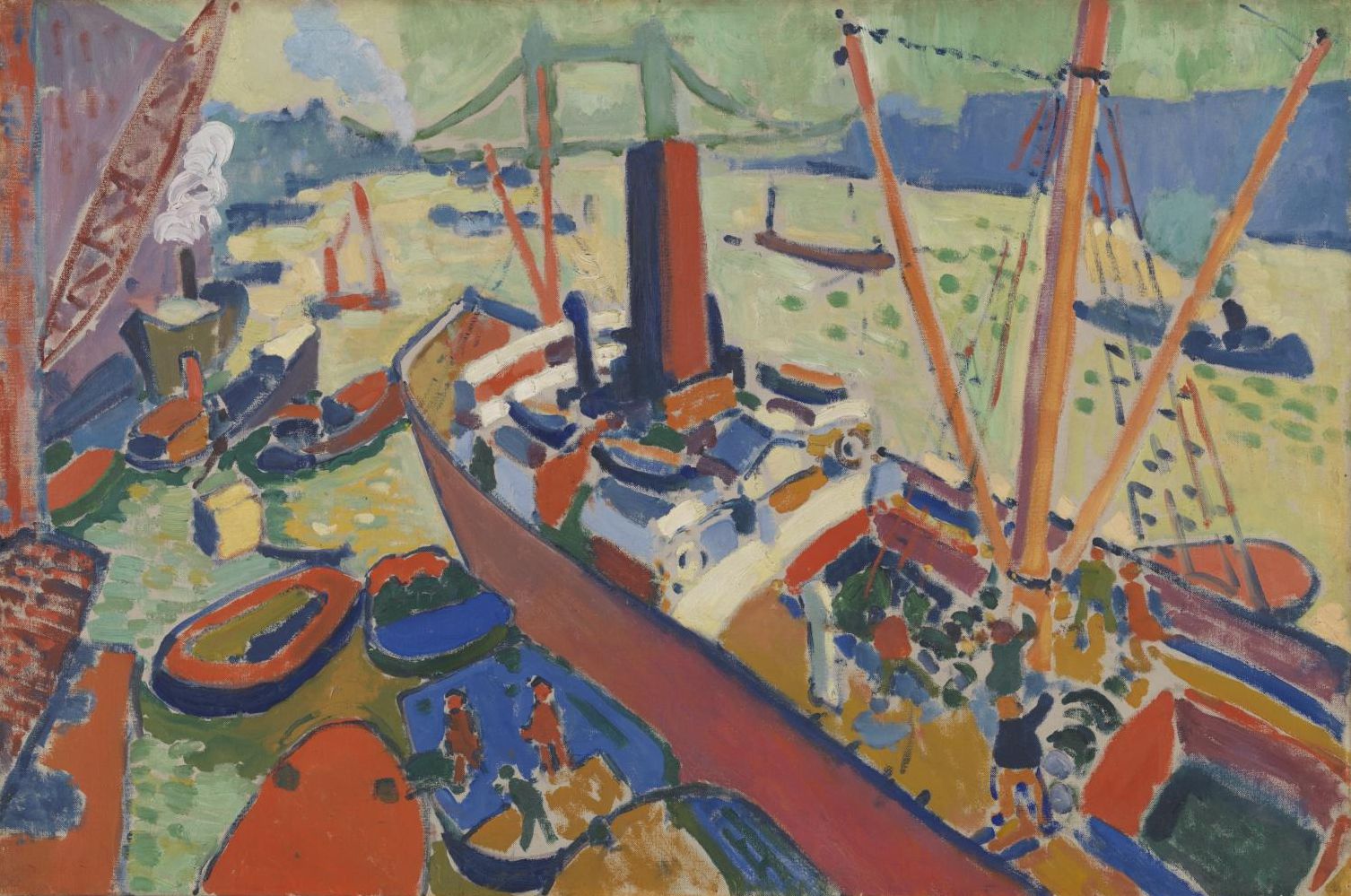
That autumn they showed the results at the Salon d'Automne in Paris. Matisse's Woman with a Hat, a portrait of his wife Amélie in clashing, unblended color, caused a commotion. The critic Louis Vauxcelles called the painters les fauves, the wild beasts, and the name stuck. The next year Derain took the method to London and painted the Thames in the same bright colors.

The Fauves drew on nineteenth-century color theory: complementary colors placed side by side make each other look brighter. The movement was short. By 1908 most of its painters had moved on, and Georges Braque went on to develop Cubism with Picasso.
Palette · Sampled from the works shown

  • Cadmium orange

    #E89D13

  • Vermilion

    #EB6B4C

  • Viridian

    #197978

  • Cobalt blue

    #1051C3

  • Yellow ochre

    #D5BF5E

How to recognize it

  • Pure, unmixed color, often straight from the tube

  • Color chosen for feeling, not accuracy: green shadows on a face, red tree trunks

  • Loose, visible brushstrokes with gaps between them

  • Complementary colors set side by side to make each other brighter

More works

What to borrow

  1. 01

    Put complementary colors next to each other to make an accent brighter without making it bigger.

  2. 02

    Color doesn't have to be literal. Use it for mood or state, and keep the mapping consistent so it still reads.

  3. 03

    Leave room between strong colors. Space keeps them from turning to mud.