Skip to content
seojeek
WorkBlogAboutContact

Gallery · Room 03 · Paris, 1907–1920s

Cubism

Painters who broke objects into flat, overlapping planes to show several sides at once.
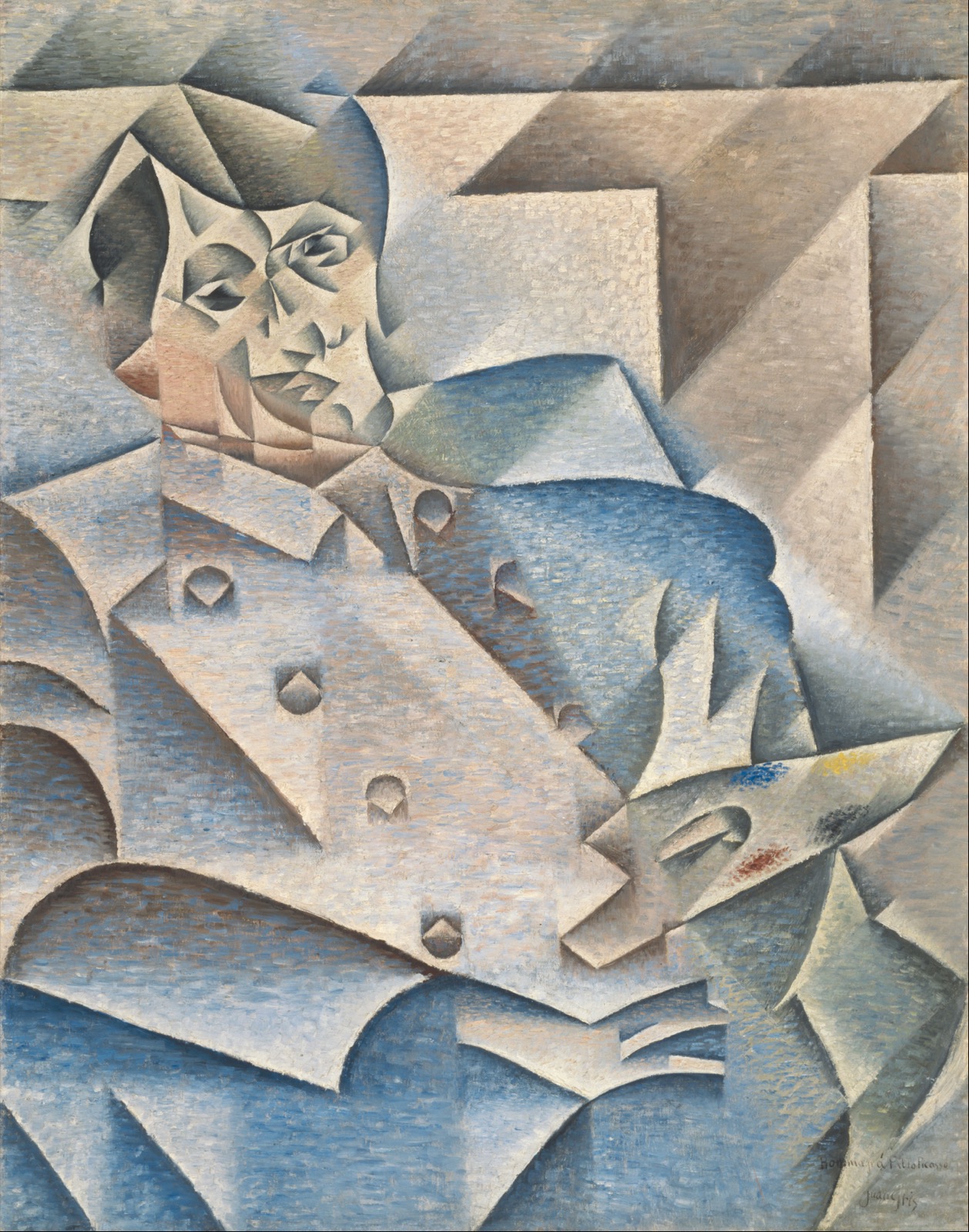
Picasso holding a painter's palette, his face and buttoned jacket broken into faceted planes of cream, grey and blue against diagonal bands of grey.

Juan Gris

Portrait of Pablo Picasso, 1912

Oil on canvas

The Art Institute of Chicago · View record ↗

Public domain, via Wikimedia Commons

Wall text

Cubism began in Paris with Pablo Picasso and Georges Braque. Most accounts start with Picasso's Les Demoiselles d'Avignon of 1907. In 1908 Braque painted landscapes at L'Estaque with simplified forms and broken perspective. Reviewing his show that November, the critic Louis Vauxcelles wrote that Braque reduced everything to cubes. The name seems to come from that remark.

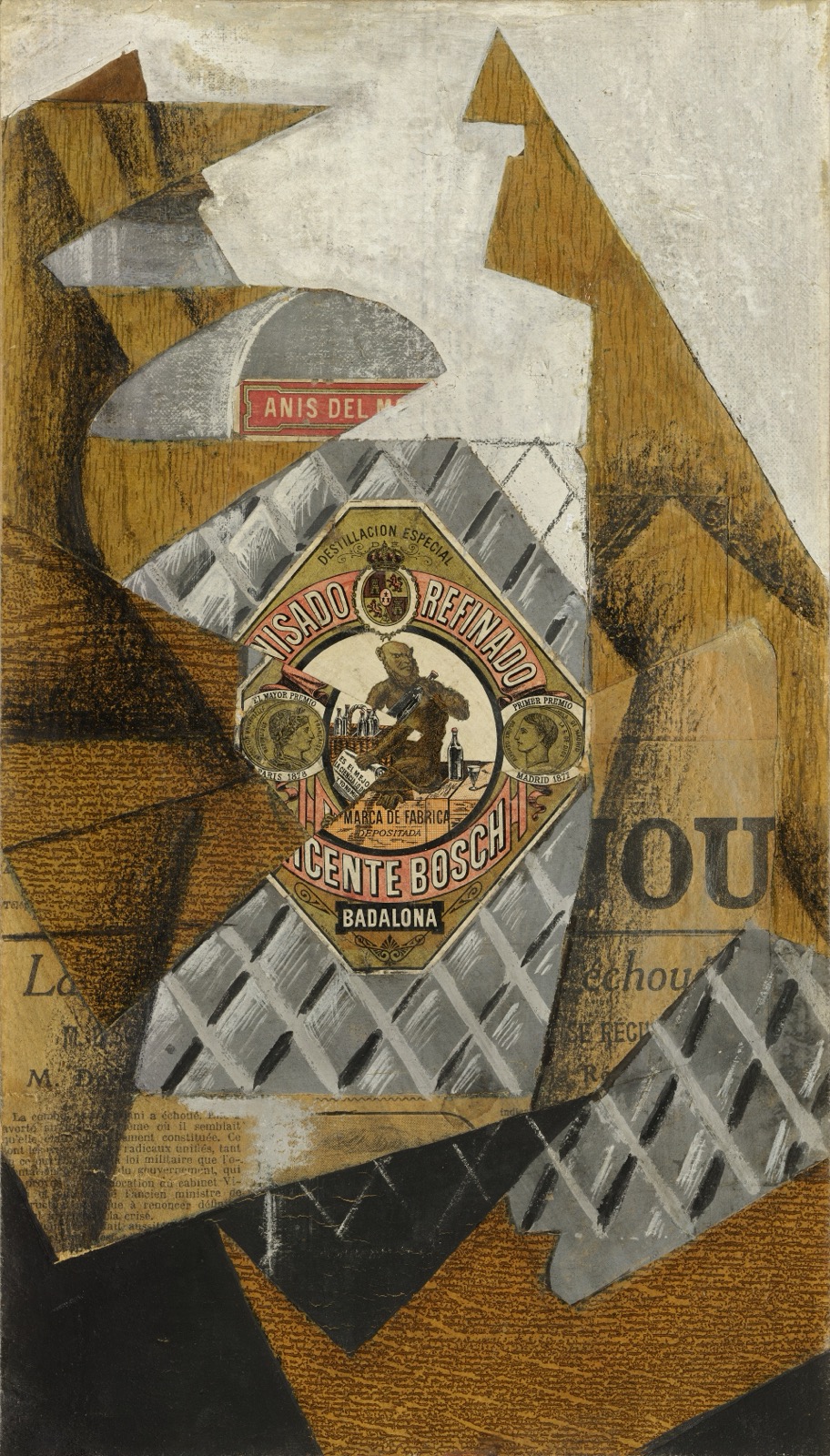
Historians divide it into two phases. Analytic Cubism broke objects into overlapping planes in muted greys, blacks and ochres, seen from several viewpoints at once. From about 1912, Synthetic Cubism used simpler shapes and brighter color. That year Picasso made the first Cubist collage, and Braque invented papier collé, drawing on pasted wood-grain paper. Picasso pasted in pages of the newspaper Le Journal, so printed words entered the picture. Juan Gris pasted in a real liqueur label.

Picasso and Braque are still in copyright in Europe, so their work is linked here rather than shown. Futurism, Suprematism and Constructivism developed in response to Cubism, and Orphism grew out of it in France.
Palette · Sampled from the works shown

  • Canvas grey

    #D0C7B8

  • Slate blue

    #6B89A1

  • Wood-grain ochre

    #977130

  • Label red

    #AB5F48

  • Charcoal

    #32272D

How to recognize it

  • Objects broken into flat, overlapping planes, seen from several viewpoints at once

  • A flat picture surface instead of the illusion of deep space

  • Muted greys, blacks and ochres early on; simpler shapes and brighter color from about 1912

  • Pasted paper, newspaper and labels, with printed words inside the picture

More works

  • A still life of pasted wood-grain paper, newspaper scraps and painted grey planes around a real Anís del Mono liqueur label, with a monkey at its center and the word BADALONA beneath.

    Juan Gris

    La bouteille d'anis (The Bottle of Anis), 1914

    Oil, collage and graphite on canvas

    Museo Nacional Centro de Arte Reina Sofía, Madrid · View record ↗

    Public domain, via Wikimedia Commons

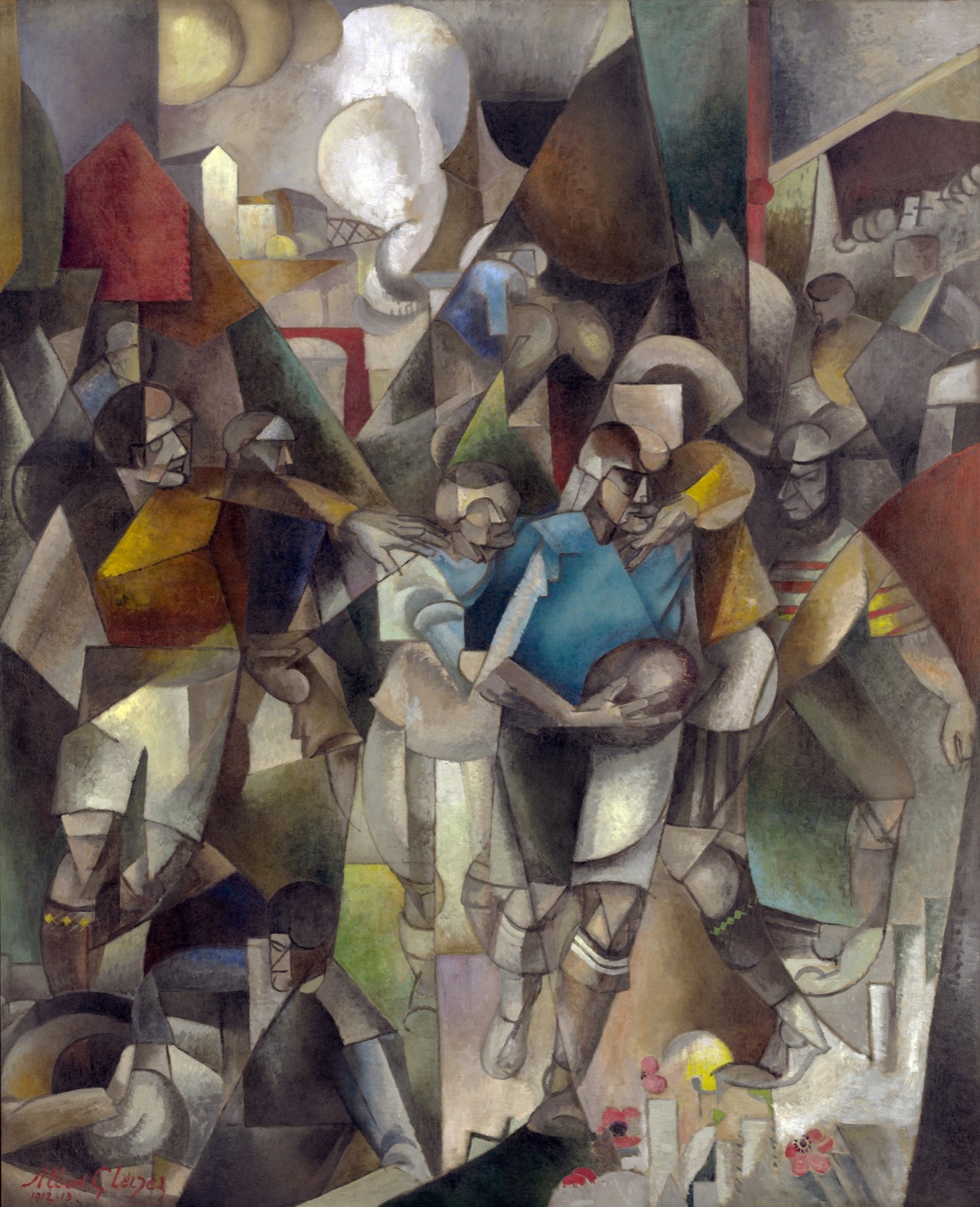
  • Rugby players locked together around a man in a blue shirt who clutches the ball, broken into angular planes of brown, grey and green, with houses and white smoke behind.

    Albert Gleizes

    Football Players, 1912–13

    Oil on canvas

    National Gallery of Art, Washington · View record ↗

    Public domain, via Wikimedia Commons

  • Pablo Picasso

    Les Demoiselles d'Avignon, 1907

    Oil on canvas

    The Museum of Modern Art, New York · View record ↗

What to borrow

  1. 01

    Admit the screen is flat. Overlap flat panels and let their edges cross instead of faking depth with heavy shadows.

  2. 02

    Show one thing from several sides in a single view: the overview, the detail and the numbers together, not hidden behind tabs.

  3. 03

    Paste in the real thing. A genuine screenshot, receipt or scrap of text grounds a layout, the way Gris's liqueur label grounds his still life.

Sources

  • Wikipedia

    Cubism ↗

  • Tate

    Cubism – Art Term ↗

  • Tate

    Papier collé – Art Term ↗

  • Wikipedia

    Georges Braque ↗

  • Wikipedia

    Juan Gris ↗

← Fauvism

Next room: Futurism →

seojeek

Alex Vallejo, full-stack engineer since 2010.
Client software by day, my own products on the side.

Contact

Send a messagealex@dayoff.ioLinkedIn ↗

Site

WorkBlogAboutContactThe Gallery (archive)

© 2026 seojeek