Gallery · Room 02 · Italy, 1909–1916
Futurism
Italian artists in love with speed, machines and the noise of the modern city.
Wall text
On 20 February 1909 the Italian poet Filippo Tommaso Marinetti published the Manifesto of Futurism on the front page of the Paris newspaper Le Figaro. It praised speed, machines and the modern city, called a racing car more beautiful than the Victory of Samothrace, and promised to free Italy from museums that it said covered the country like cemeteries.
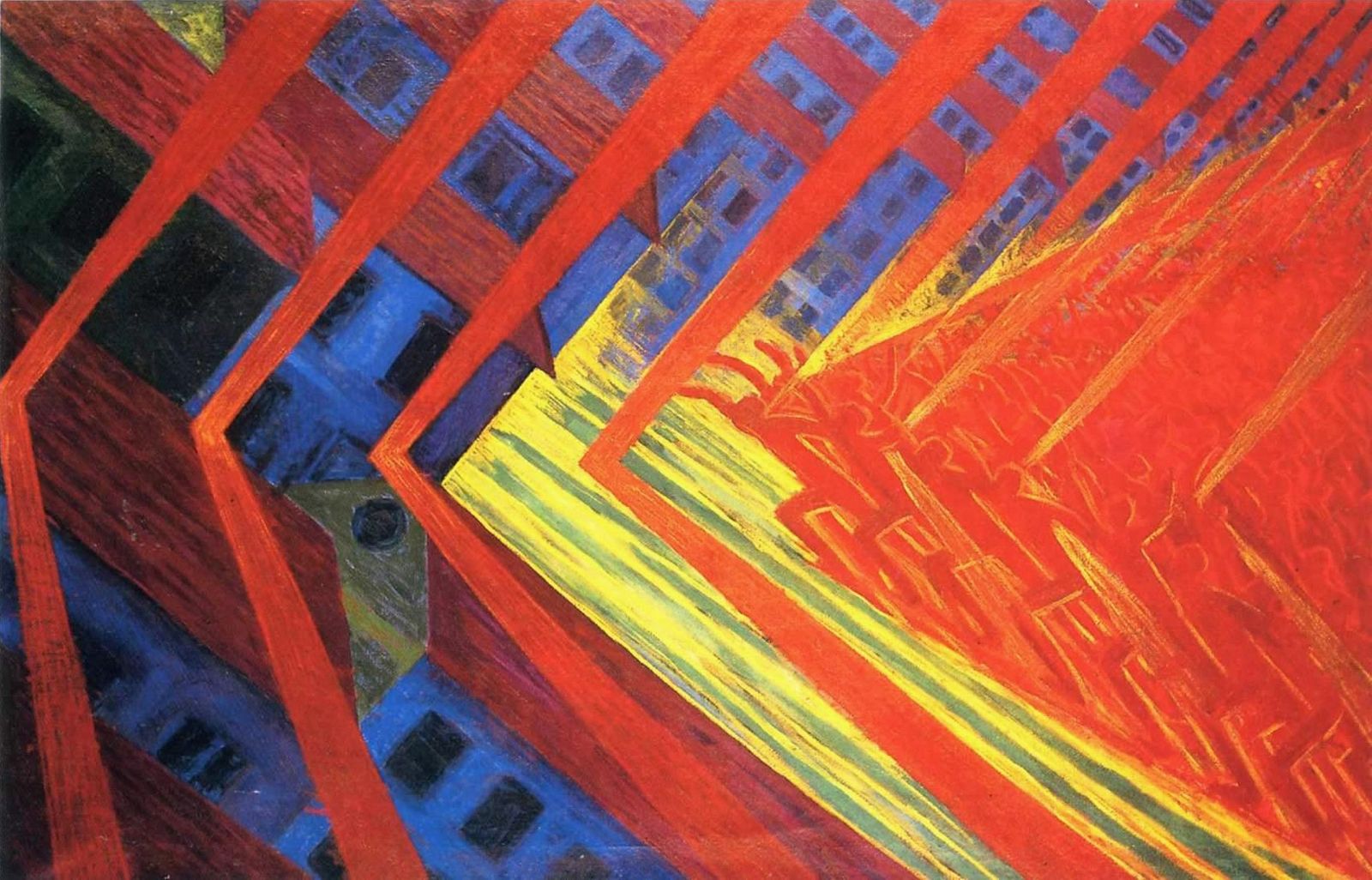
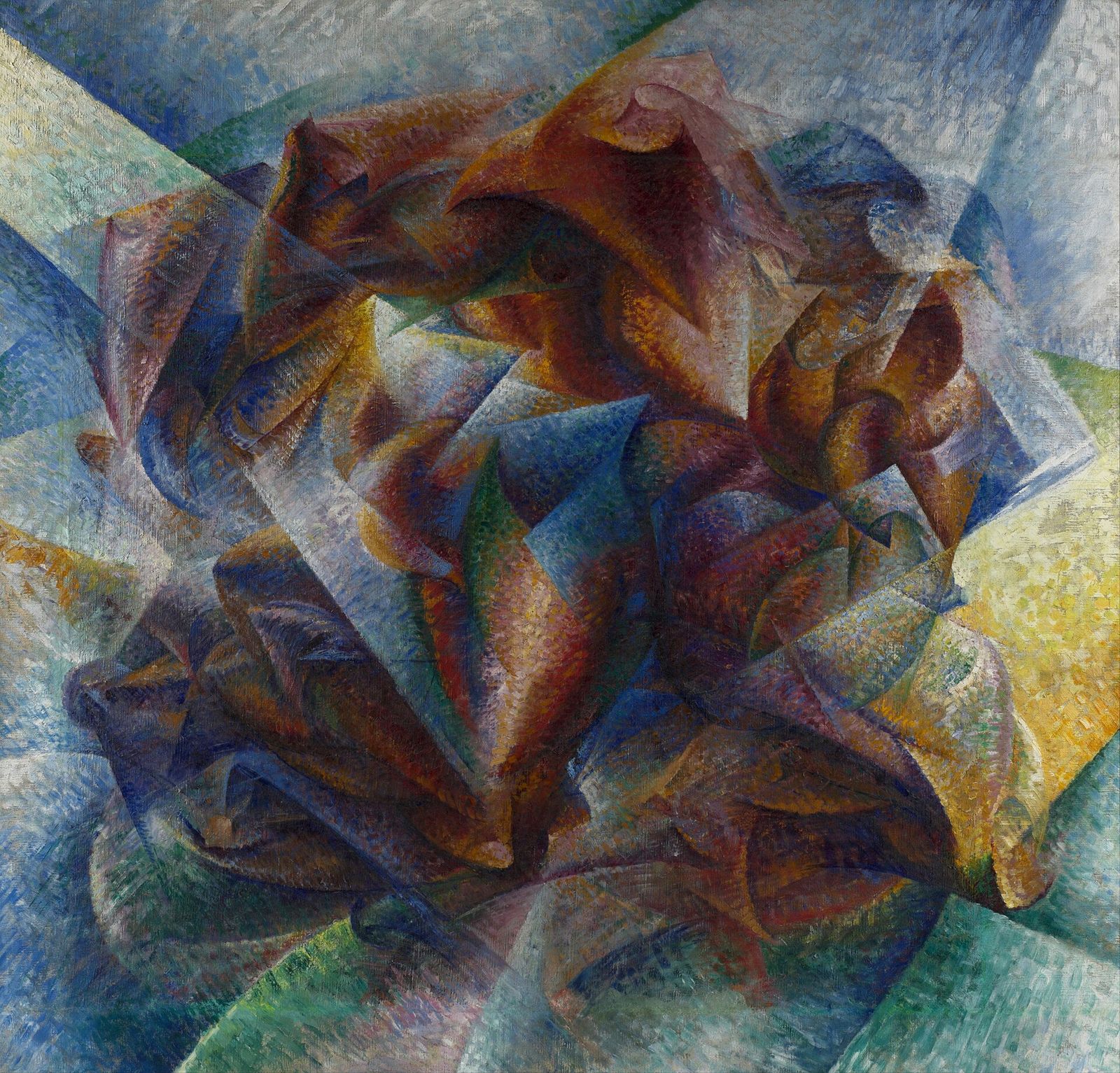
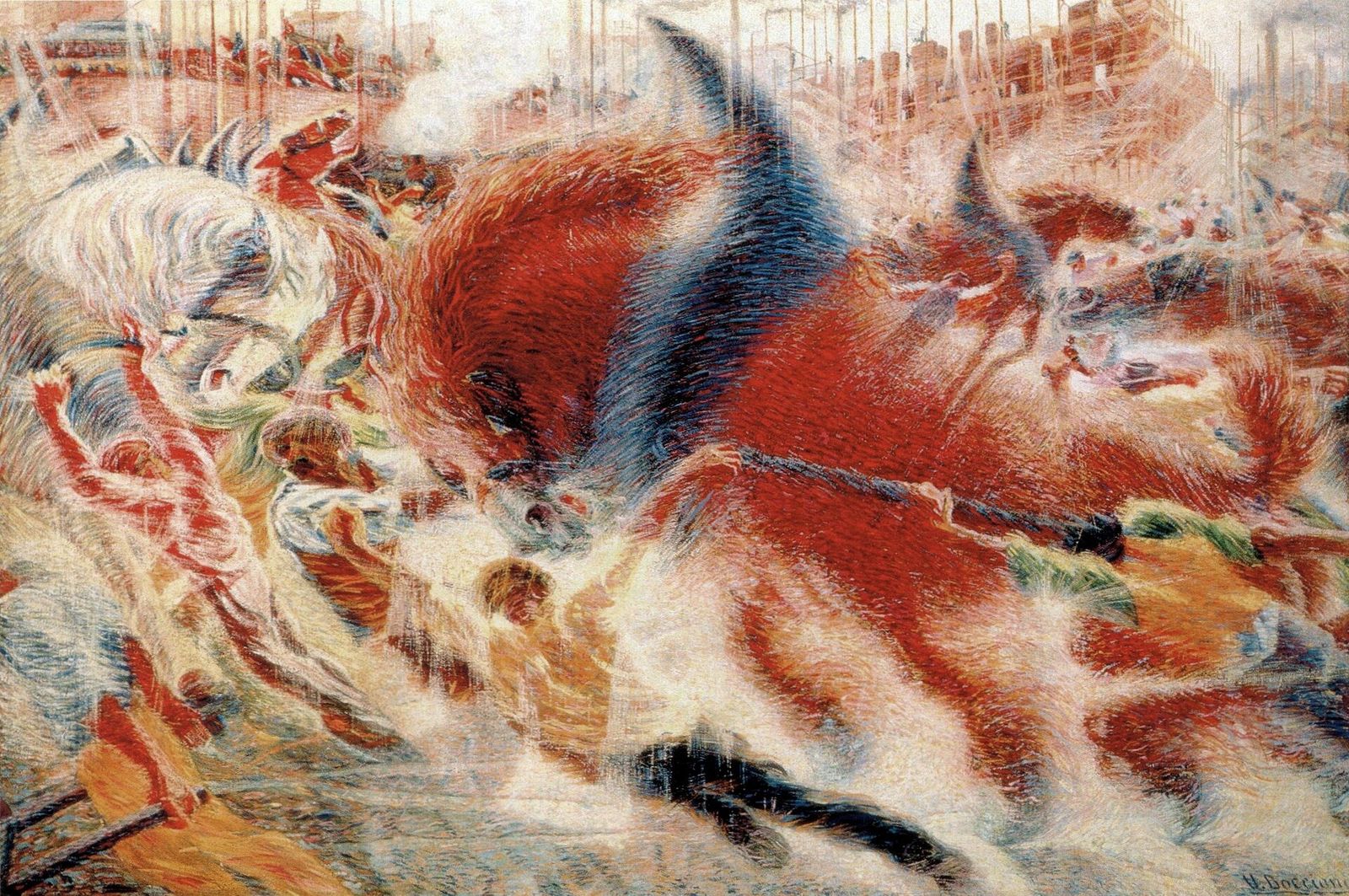
Painters soon followed. Umberto Boccioni, Carlo Carrà and Luigi Russolo met at Milan's Famiglia Artistica and persuaded Marinetti to bring Futurism to the visual arts. They borrowed the broken color of neo-impressionism and the fractured planes of Cubism to paint energy and motion rather than objects. Russolo went further: in 1913 he published The Art of Noises and built noise-making machines.
Boccioni died in 1916 after falling from his horse during military training, and the first wave ended with him. Futurism's worship of speed and violence later fed into Italian Fascism, a legacy that sits alongside its influence on modern design.