seojeek

Alex Vallejo, senior software engineer

Gallery · Room 03 · Paris, 1912–1914

Orphism

Painting meant to work like music: rings and disks of pure color, and no subject at all.
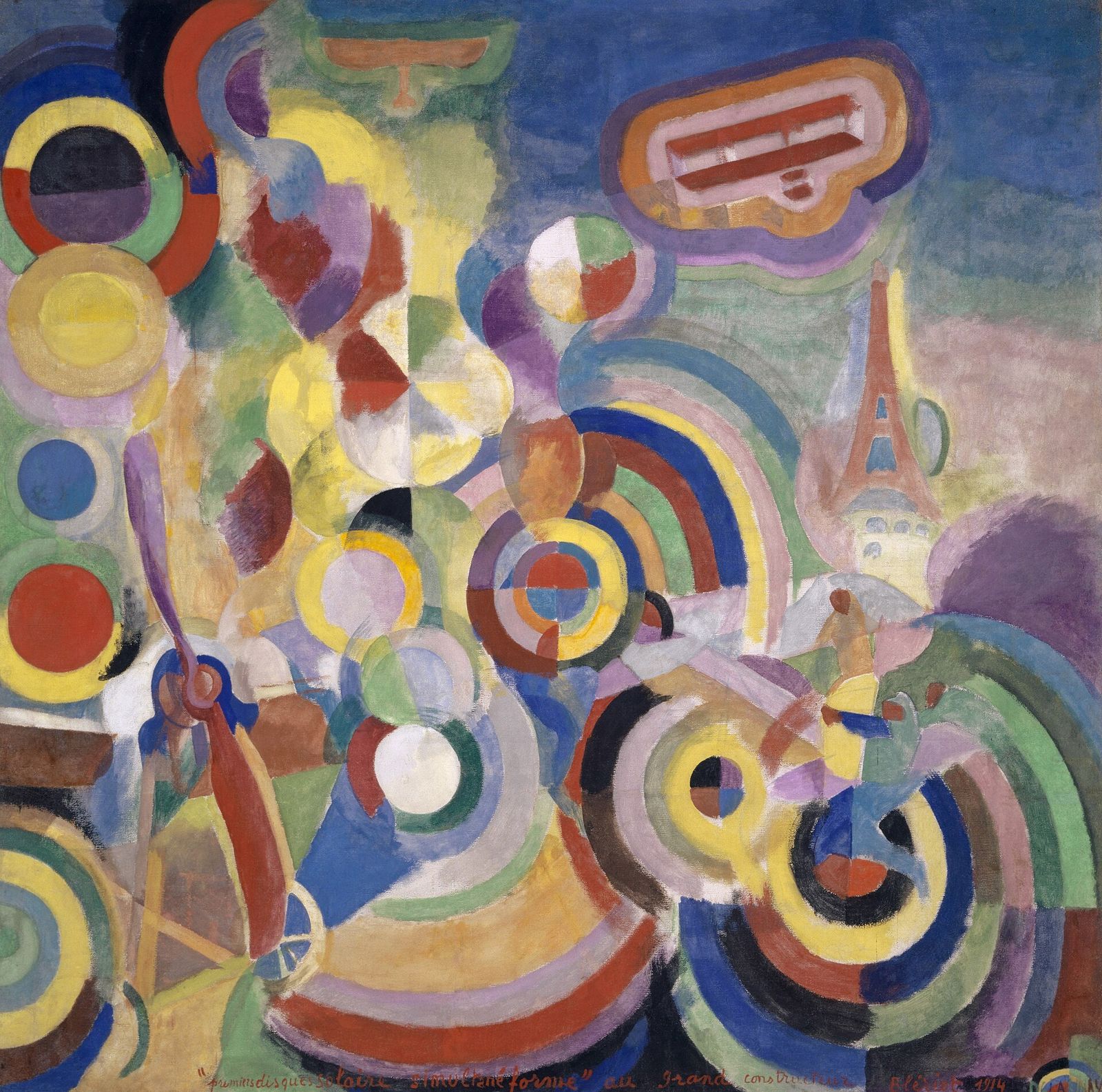
Overlapping rings and disks of bright color fill the canvas, with a propeller, a small biplane and the Eiffel Tower among them.

Robert Delaunay

Homage to Blériot, 1914

Glue-bound distemper on canvas

Kunstmuseum Basel · View record ↗

Public domain, via Wikimedia Commons

Wall text

Around 1912 Robert and Sonia Delaunay began painting with patches of pure color arranged into harmonious, often circular compositions. The poet and critic Guillaume Apollinaire called it Orphism, after Orpheus, the musician of Greek myth, because he believed painting could work like music and move people without depicting anything. Robert preferred his own word, simultanism.

Their source was Michel-Eugène Chevreul's nineteenth-century theory of simultaneous contrast: colors change each other when they sit side by side. Delaunay's disks, such as Homage to Blériot, dedicated to the aviator and aircraft designer Louis Blériot, set rings of complementary color spinning against each other. Sonia carried the same ideas into textiles, clothing and book covers.

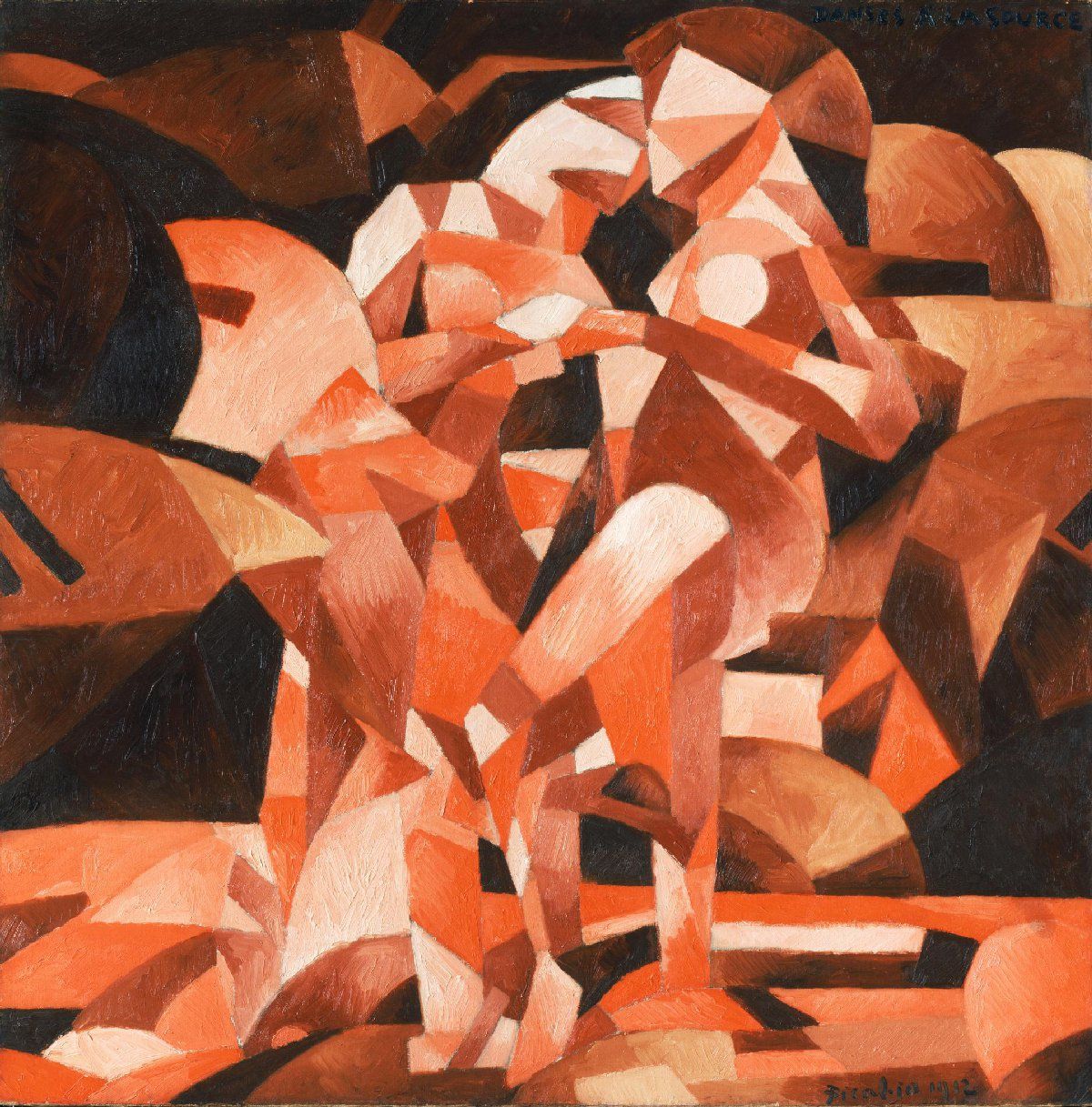
Others came close to the circle, including František Kupka and Francis Picabia, who showed Dances at the Spring in Paris in 1912. Orphism was brief, but it was one of the first steps into pure abstraction.
Palette · Sampled from the works shown

  • Chrome yellow

    #DEC66F

  • Coral orange

    #EA8254

  • Brick red

    #943E2E

  • Sage green

    #839073

  • Prussian blue

    #354A79

How to recognize it

  • Circles, disks and arcs of pure color

  • Complementary colors side by side, so the edges seem to vibrate

  • Nearly abstract pictures with fragments of the modern city: the Eiffel Tower, propellers, windows

  • Color arranged like music, with rhythm and harmony instead of a subject

More works

What to borrow

  1. 01

    Concentric circles and arcs make a focal point without needing a picture.

  2. 02

    Judge a color next to its real neighbors. A color picked on its own will look different in the layout.

  3. 03

    Carry one visual system across media, as Sonia Delaunay did from canvas to fabric to book covers.