Skip to content
seojeek
WorkBlogAboutContact

Gallery · Room 17 · United States, 1975–1981

The personal computer

Computers small and cheap enough for one person to own, from hobby kits to the IBM PC.
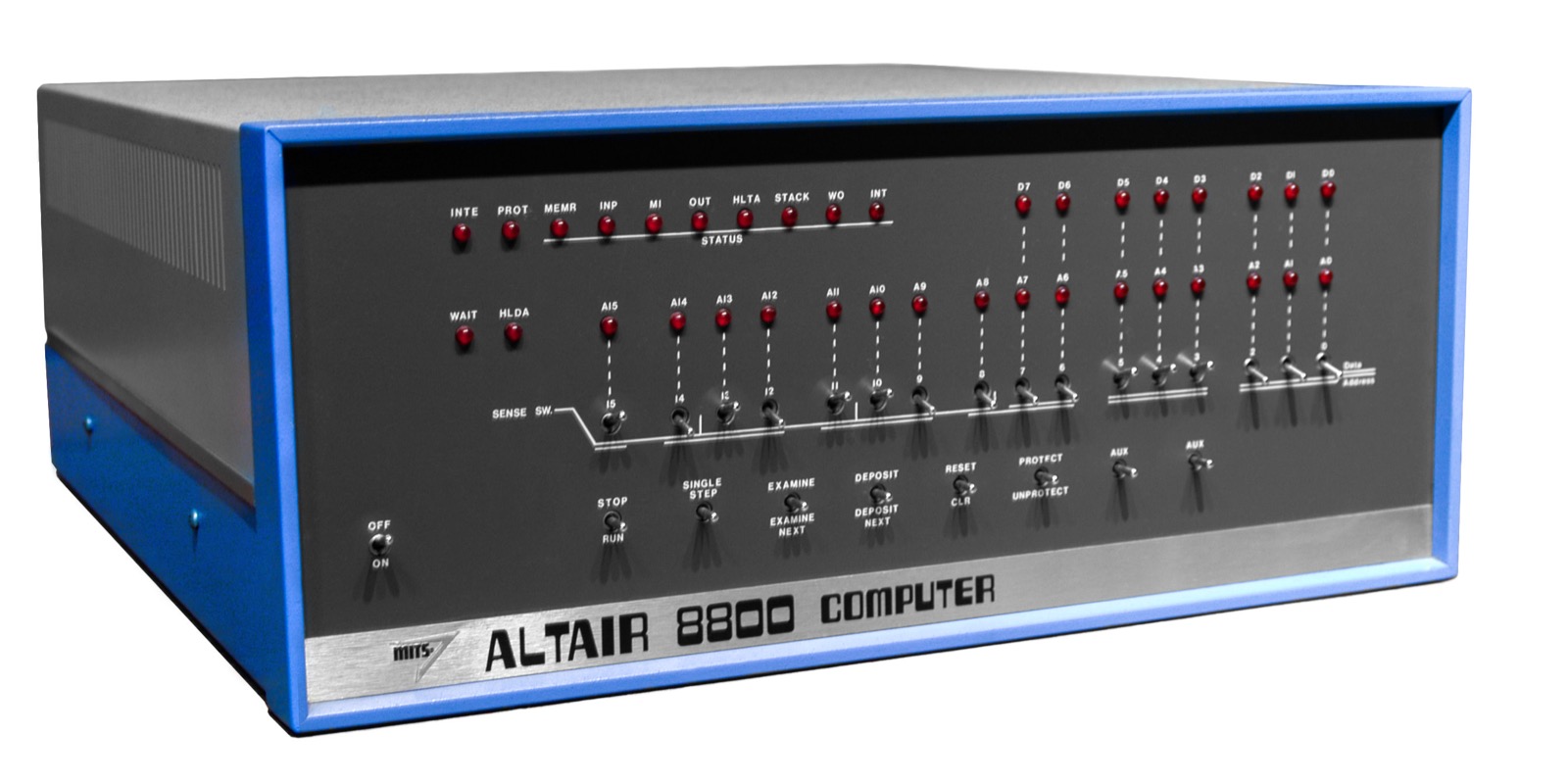
A low metal box with a blue frame and a dark grey front panel carrying rows of red lights and toggle switches, above a brushed-metal strip reading ALTAIR 8800 COMPUTER.

MITS (Micro Instrumentation and Telemetry Systems)

Altair 8800, 1974

Microcomputer kit, Intel 8080 processor

National Museum of American History, Smithsonian Institution · View record ↗

Photo: Ed Uthman from Houston, TX, USA, CC BY-SA 2.0, via Wikimedia Commons

Wall text

Which machine was the first personal computer is disputed, because the answer depends on the definition. The Computer History Museum names the Kenbak-1 of 1971, chosen by judges in a 1986 contest held by the Computer Museum in Boston. It had 256 bytes of memory, switches and lights for input and output, and no microprocessor. The Smithsonian credits the Altair 8800, a kit on the cover of Popular Electronics in January 1975, with starting the personal computer age.

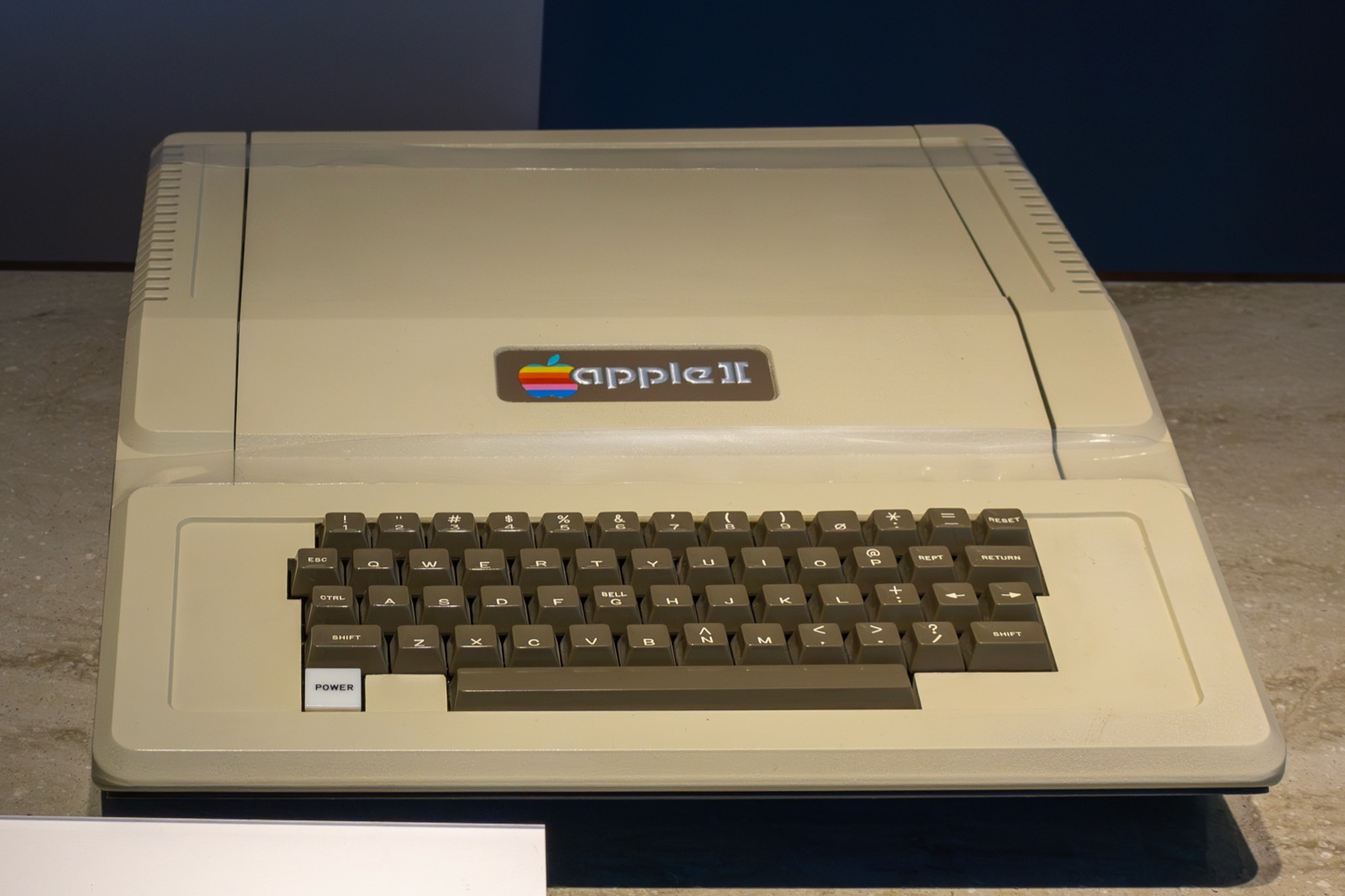
The Altair inspired Bill Gates and Paul Allen to write a BASIC interpreter for it, the first product of their company, then called Micro-Soft. In 1976 Apple sold the Apple I as a single, tested circuit board. In 1977 the Commodore PET, the TRS-80 and the Apple II arrived fully assembled. They are often counted as the first mass-market personal computers.

IBM introduced its Personal Computer on 12 August 1981. Microsoft supplied the operating system, later known as MS-DOS, and IBM published the machine's technical details. Its design became the basis of the IBM PC compatible standard.
Palette · Sampled from the works shown

  • Altair blue

    #4884E0

  • Front-panel charcoal

    #3B3B3B

  • Status-light red

    #880A15

  • Apple II beige

    #9E8F70

  • Keycap brown

    #3A2E17

What changed

  • Software became a product of its own: Microsoft began by licensing its BASIC to MITS, the Altair's maker

  • Machines arrived assembled with BASIC built in, so owners could type programs at once and save them on cassette tape

  • VisiCalc, the first spreadsheet program, appeared for the Apple II in 1979 and sold the machine to business users

  • IBM published the PC's technical reference, so other companies could write software and build add-ons and compatible machines

More works

  • A beige plastic computer with a built-in keyboard of dark brown keys and a rainbow apple II badge on its sloping lid, in a museum case.

    Apple Computer

    Apple II, 1977

    Microcomputer, MOS 6502 processor

    Computer History Museum, Mountain View · View record ↗

    Photo: The wub, CC BY-SA 4.0, via Wikimedia Commons

  • IBM

    IBM Personal Computer, Model 5150, 1981

    Microcomputer, Intel 8088 processor

    Computer History Museum, Mountain View · View record ↗

What to borrow

  1. 01

    Leave slots open. The Apple II's eight expansion slots let other companies add to it; a plugin system or public API does the same for software.

  2. 02

    Ship it working. The 1977 machines came assembled and ready to use, so make the product useful the moment it opens, not after setup.

  3. 03

    Make the first screen a place to start. The Apple II started up in BASIC, ready for typing; an empty state should invite the first action, not just say nothing is there.

Sources

  • Wikipedia

    History of personal computers ↗

  • Computer History Museum

    What Was The First PC? ↗

  • Computer History Museum

    The Homebrew Computer Club ↗

  • Computer History Museum

    1977, Timeline of Computer History ↗

  • IBM

    The IBM PC ↗

← Memphis

Next room: Macintosh →

seojeek

Alex Vallejo, full-stack engineer since 2010.
Client software by day, my own products on the side.

Contact

Send a messagealex@dayoff.ioLinkedIn ↗

Site

WorkBlogAboutContactThe Gallery (archive)

© 2026 seojeek