2026-04-26
The paradigm shift
From UI/UX to project management to execution and client feedback, vibe coding has changed the game. This applies to not just developers and UI folk, but project managers, and most importantly, clients and business owners.
The Old Paradigm
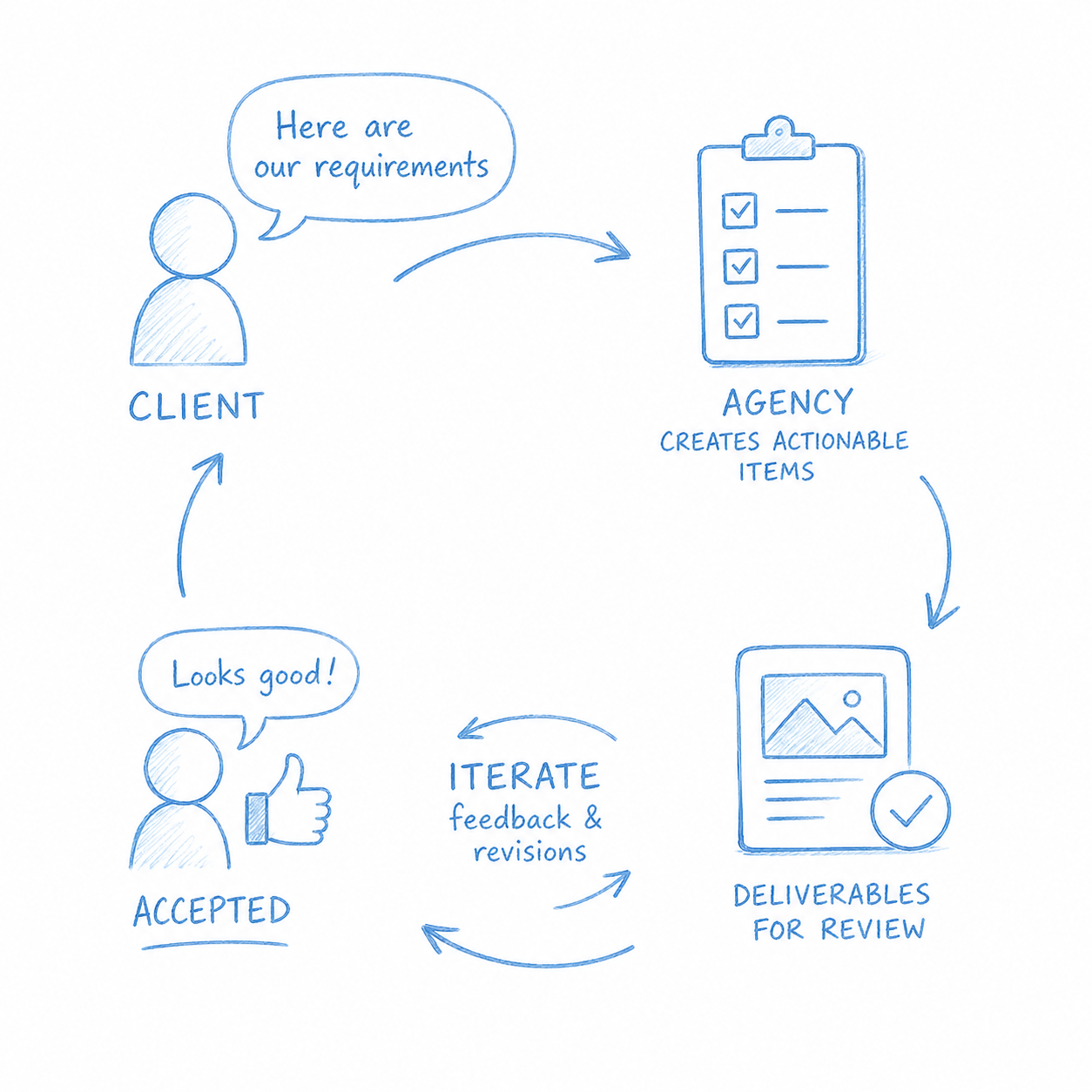
Let's rewind to the 2022 era. Before AI really took off, the back-and-forth workflow between clients and web development agencies typically went as follows:
- The agency gathers project requirements and project vision.
- The agency builds high-fidelity designs around them.
- The client provides feedback, leading to design iterations.
- Designs get approved and broken out into actionable tickets for development.
- Development implements the design and goes back to the client for approval.
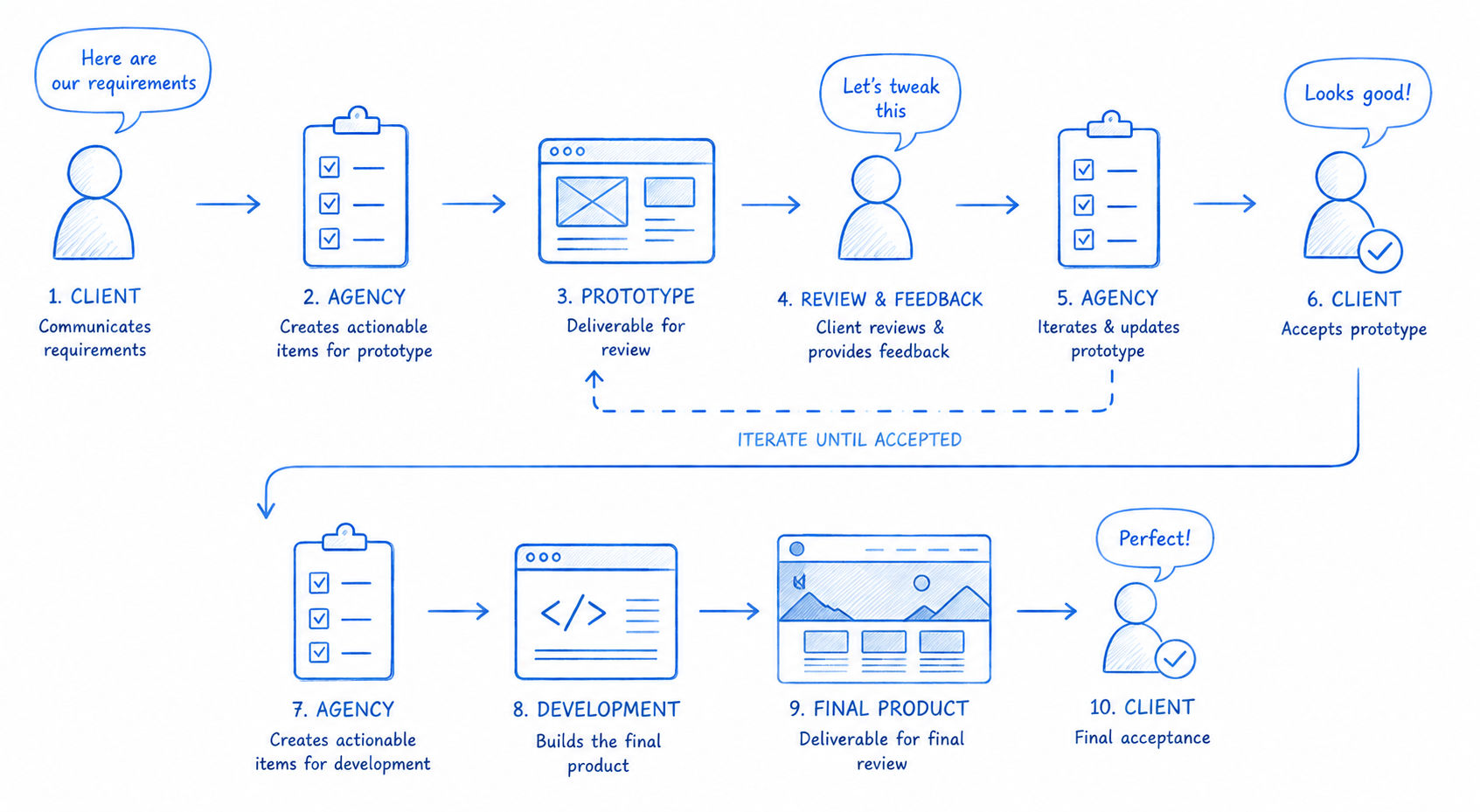
I'm skipping some steps. Prototypes can precede designs, and it's all meant to help UI/UX teams align with project requirements so they can deliver something that excites the client. Many agencies still operate within this design-centric paradigm.
The New Paradigm
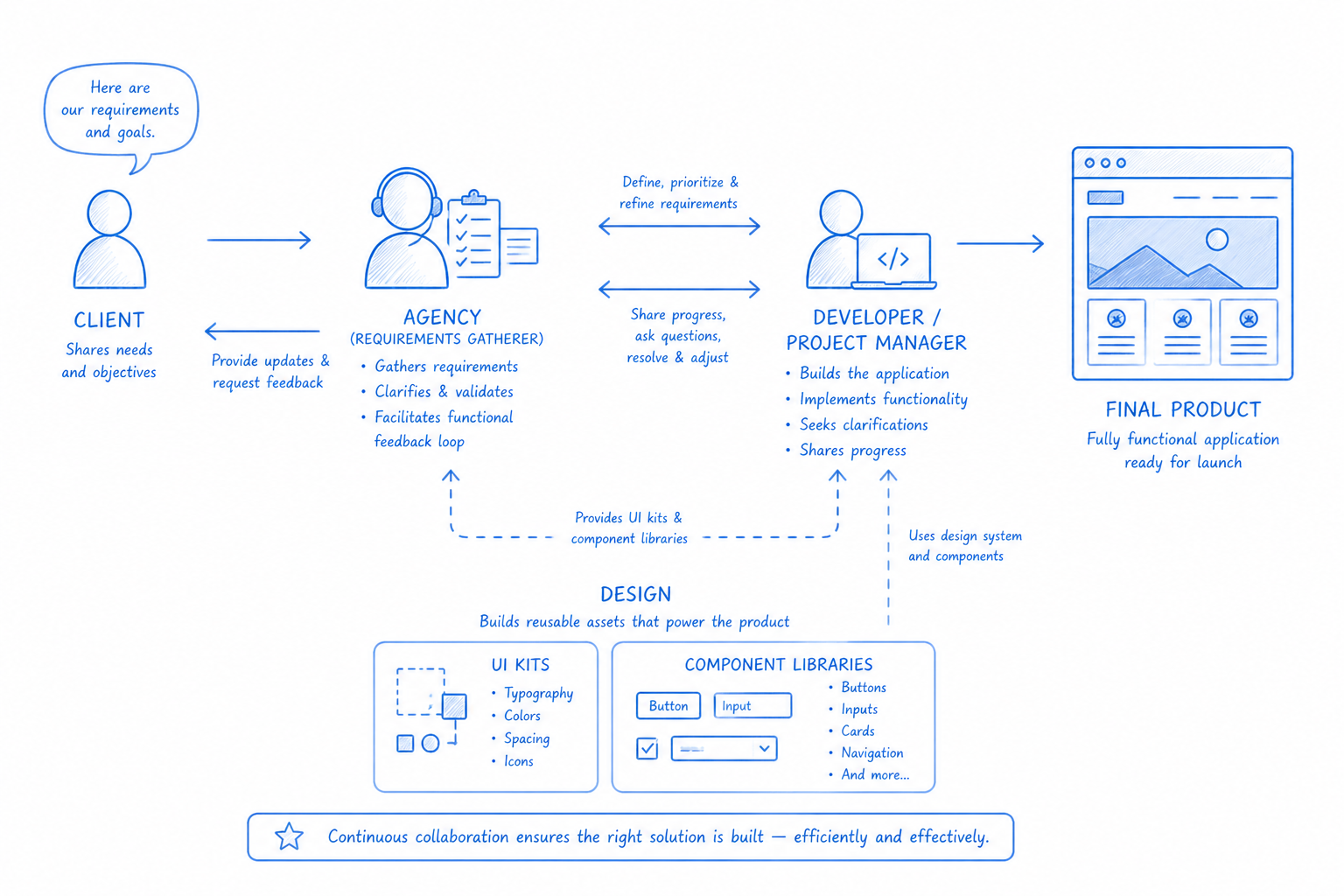
Agents, whether Claude, GPT, or Gemini, are rapidly shortening the time it takes to go from requirements to a fully functioning application. The productivity gains are enormous, and they are reshaping everything, including client expectations. Clients, at the end of the day, just care about meeting their online presence and business logic needs, along with their quotas, deadlines, and KPIs. Months of back-and-forth design reviews are being thrown out the window as businesses reprioritize their web application and online strategies. Even though agents are giving developers massive productivity leverage, the skills by which tokens are translated into deliverables are shifting away from pure coding and into project management. If you want to survive, you need all of the above: project management, communication and writing, systems architecture, and UI/UX principles. Let's break it down.
Project Management
I'm debating whether this is now the most important skill because it really hones in on the one key ingredient for success: requirements gathering. The old paradigm basically meant that once requirements were communicated, PMs would relay them to the design team, create tickets, and then the design team would operate behind a curtain and eventually come out with wireframes or designs to see if the client liked them. The new paradigm skips this and goes straight to development, allowing the client to work alongside the development of the end product. Project management has always acted as an intermediary between the client and the development team. This is still true, but gathering requirements will now require a more hands-on role from developers themselves in order to swiftly execute against business requirements and collect client feedback. The PM's role will shift toward making sure this communication channel is established with the least amount of friction.
UI/UX
The role of UI/UX will arguably experience the biggest disruption due to the emergence of rapid prototyping with agents. Now, I'm not a UI/UX person, so I'm not intimately familiar with those workflows or how they incorporate AI. I'm looking at this from the lens of a developer who works off of Figma designs and tries their best to implement the design as close to pixel perfect as possible. And while it is certainly still possible to take a Figma design and tell Claude to build it, the question every builder needs to ask themselves is: how do you know your design is the optimal solution? The old paradigm granted flexibility but left clients with very limited choice: “Do I take this design and approve it and hope that, in practice, it is optimal? Do I push back and say I don't like it, which will only delay the project?” What ends up happening is that the client says “good enough,” waits for the deliverable downstream, then starts providing scope creep changes that require the whole process to iterate. What's “good enough” hardly ever gets final approval.
So what changed here? The introduction of a new client choice: the output of the AI agent. I'm sure even clients are now, at this very moment, reviewing Figma designs from their agencies and wondering, “I wonder if AI could do this better?” And that is a very scary thought. All of the work is now in competition with these agents.
Agents can now take business requirements and build things that not only work well, but look arguably excellent in a matter of seconds. I've been seeing it firsthand. And this is nothing against UI/UX people. I'm not saying agents are replacing you. I'm saying if you're a UI/UX person and you're not recognizing the agent in the room, you're not reading the room to begin with. The time saved from working alongside an agent is more than enough to disrupt the old paradigm. So where does that leave you, the designer?
Many UI/UX designers are UI first, UX second. The new paradigm works with this bias, not against it. Designers now become the differentiators against monotonous agent output. While the developer and PM are gathering requirements and iterating on the functional application in real time, the designer can pivot away from entire storyboard Figma designs and toward more granular design decisions: UI kits and design systems. They can also facilitate the early process by suggesting prototypes that they themselves build with AI, and help guide requirements gathering since they hold the UX expertise. Whereas developers will be more concerned with the underlying tech stack and architecture, UX still plays a vital role in guiding the agents during requirements definition.
Adapt or die
This is perhaps the most exciting time to be in web development because we're no longer restrained by “How long is design and development going to cost?” Instead, the question becomes, “How can we best leverage AI to utilize our agency skills and deliver value to clients?” We're only constrained by our ideas and communication channels. The teams who iterate on tooling will have the best advantage long term. Building design systems, finding the path of least resistance, prompt engineering, and requirements gathering: these are the skills needed right now. At the end of the day, we're competing for happy clients. The happiest clients will be the ones who are introduced to these powerful new workflows in order to beat deadlines and feel part of the process of delivering the end product. I can't stress enough how important requirements gathering is during this transition. Project management becomes central to ensuring this process actually happens. We are in the golden age of web development and design. Thanks for reading.